"At-home blood test" covers three different products. One is a kit you prick your finger for. One is a small device you press against your upper arm. The third is a phlebotomist who comes to your door and draws from a vein, the same way a lab would. Which one you buy decides how many markers you get back, how far you can trust a borderline result, and what a year of testing costs.
We compared six services on what is published and checkable: price, how the blood is collected, how many markers come back, how fast, and what happens after the results. Our pick for most people is Rythm Health. You collect the sample yourself in a few minutes, nothing goes into a vein, and results are back in under 48 hours. If you want more markers from a kit, look at SiPhox Health. If you want a full lab-grade panel, Function Health and Superpower will send someone to your home in some areas.
The 6 Best At-Home Blood Tests Compared
| Service | Price | How blood is collected | Markers | Results |
|---|---|---|---|---|
 1. Rythm Health Best overall | $79 a test, plus shipping and tax | Yourself, with an upper-arm device | 25+ per test | Under 48 hours |
 2. SiPhox Health The broadest self-collected kit | $124 a test, plus shipping and handling | Yourself, with an upper-arm device | 14 to 29 per base panel, 60+ on the top panel | 7 to 10 days |
 3. Function Health The most lab tests | $365 a year | At a Quest lab, or a home visit in select areas | 160+ lab tests a year, over two visits | First results in about 48 hours |
 4. Superpower The lowest price for a broad panel | $199 to $349 a year, depending on the offer | At a Quest lab, or a home visit for a fee | 100+ per draw | About a week |
 5. Everlywell One specific question | $49 to $249 a kit | Yourself, with a finger prick | A handful per kit | 10 to 14 days after you order |
 6. Quest A single lab test with a home visit | Priced per test, plus $99 for a home visit | A phlebotomist at home where offered, or at a lab | You choose the tests | Posted online as they are ready |
Prices and panels as each company published them on November 15, 2026. Logos belong to their respective companies.
What "At-Home" Really Means
The phrase hides the most important difference between these products, which is how the blood leaves your body.
- A finger prick. You lance a fingertip and drip blood onto a card or into a small tube. It is the cheapest way to test and the one with the least blood to work with, so each kit measures only a few things. Everlywell works this way.
- An upper-arm device. You press a small device against your arm and it collects capillary blood in a few minutes, without a needle in a vein. It gathers more than a finger prick, which is why Rythm Health can run 25+ markers and SiPhox Health up to 60+. You are still the one collecting the sample.
- A phlebotomist at your door. A trained professional draws from a vein, at your home. This is the same sample a lab takes, so it supports the broadest panels: 100 markers or more from one visit. Function Health, Superpower and Quest offer it in some form, usually for an added fee and not everywhere.
The trade you are making
A kit is easier. A draw tells you more. Self-collected kits win on convenience and on how often you can repeat them. A venous draw wins on the number of markers and on reliability, because nobody is depending on you to fill a tube correctly.
Neither is wrong. A broad draw answers "what is going on with me?" A kit answers "is the thing I am working on moving?" Most of the disappointment in this category comes from buying one when you needed the other.
How We Picked
We read each company's own pricing page, product pages and help pages on November 15, 2026, and ranked on five things:
- Whether it is genuinely at home. A service only counts if the blood can be collected where you live, without a trip to a lab.
- The real price of a year. Not the headline. Shipping, home-visit fees and how often you are billed all count.
- How many markers come back, and how fast.
- How easy it is to repeat. One result is a snapshot. A change you make only shows up on the second one.
- What happens after the results: who reads them, and whether anything follows.
We did not run our own samples through all six. Where we have reviewed a service in depth, the full review is linked from its entry below.
1. Rythm Health
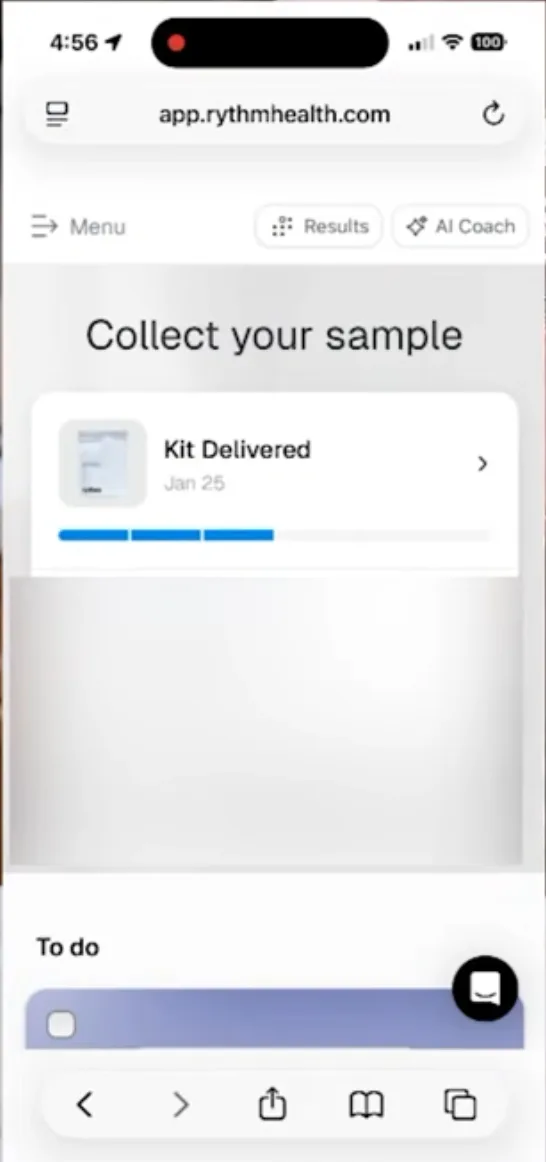
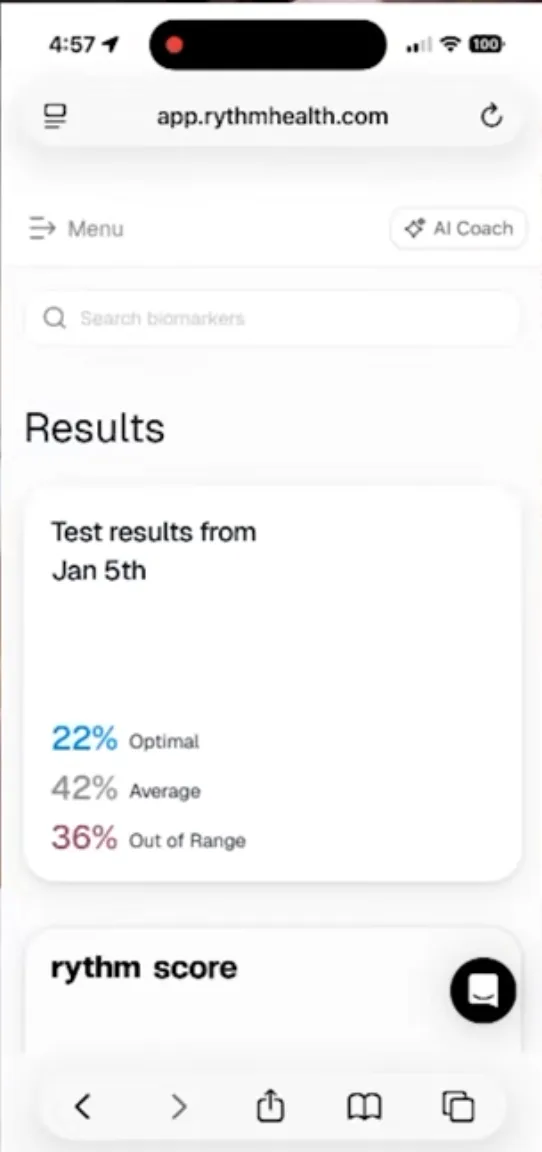
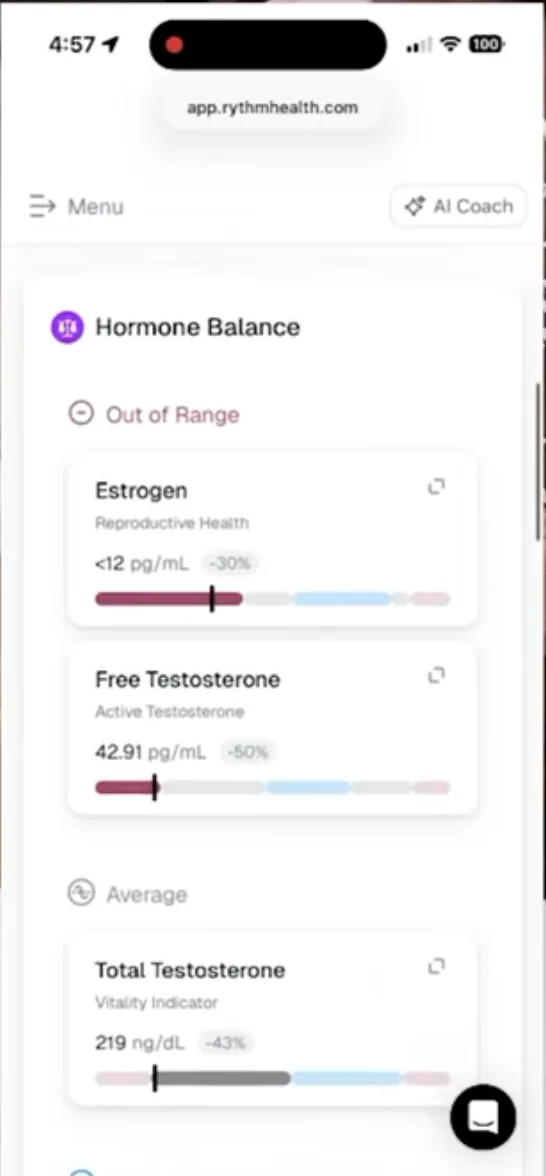
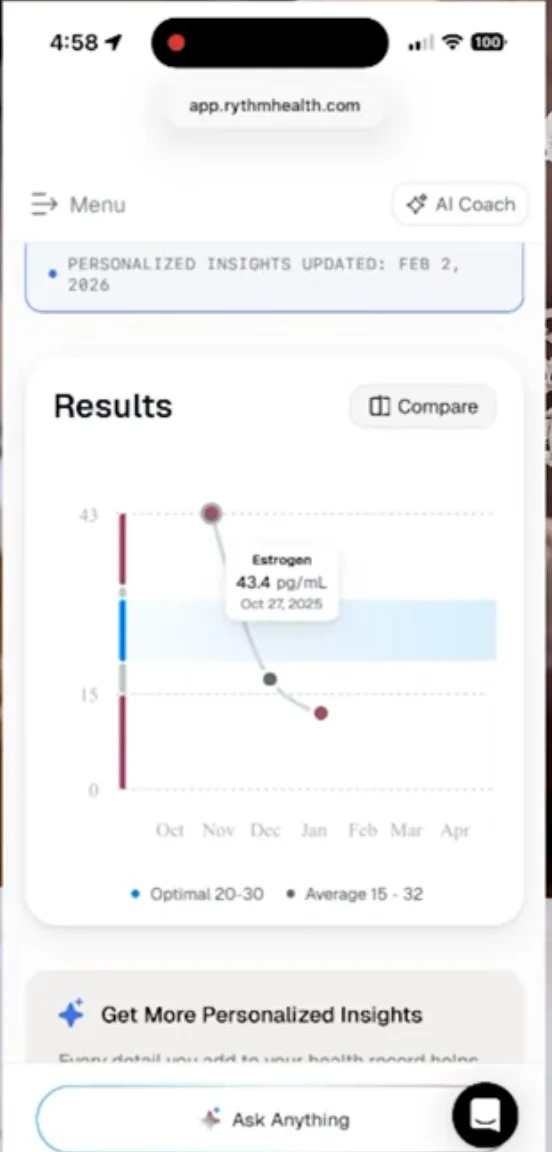
Rythm Health, often searched as Rhythm Health, mails a kit every month. You press a device against your upper arm, it collects a capillary sample in a few minutes, and you ship it back. Rythm runs the sample in its own lab and says results arrive in under 48 hours.
It is first because it does what most people mean by an at-home blood test, with the fewest ways to go wrong: nothing to book, no needle in a vein, and an answer in two days. At $79 a test it is also the lower-priced of the two arm-device kits on this list.
- 25+ biomarkers per test. Hormones (total and free testosterone, estradiol, SHBG, cortisol), thyroid, heart health including ApoB and hsCRP, vitamin D, ferritin, and kidney and liver essentials. The men's and women's panels differ.
- Monthly by design, flexible in practice. The subscription renews every 30 days. You can skip up to 90 days at a time without being charged, and cancel with no fee.
- Its own lab. A state-licensed physician signs off each report.
- An app built around trends. A chart for every marker, an AI coach, and exports to PDF or CSV for your own doctor.
- Available in every state except Rhode Island, HSA and FSA eligible, with a 90-day money-back guarantee on a first purchase.
Why it is first
- Results in under 48 hours
- No lab, no appointment, no vein
- Monthly readings give real trend lines
- Skip up to 90 days, or cancel, with no fee
- Available in every state
Where it falls short
- About $100 a test once shipping is added
- The same 25+ markers every time, with no broad baseline
- Stops at the data: it does not prescribe
- Two markers on the men's panel are not available in New York
- A self-collected sample can come up short
Rythm is at its best once you know which numbers you are watching, such as testosterone, ApoB or ferritin. Its limit is breadth: it never looks beyond its own panel. Our Rythm Health review covers the panel and the real delivered cost.
2. SiPhox Health
SiPhox Health also uses an upper-arm device, which it calls EasyDraw, with live one-to-one support while you collect. The difference from Rythm is breadth and pace. You choose a base panel (longevity, thyroid, hormones, or heart and metabolic, 14 to 29 markers each), or add $125 for its Ultimate 360 panel of 60+ markers. Then you pick how often a kit arrives: monthly, quarterly or every six months.
Where SiPhox wins
- Up to 60+ markers without a venous draw
- You set the cadence, down to twice a year
- Switch panels between tests
- Processed in CLIA and CAP accredited labs
Where it falls short
- Results take 7 to 10 days, against Rythm's 48 hours
- The 60+ panel is $249 a test before shipping
- Fewer markers than a venous baseline
- A wellness service: it does not diagnose or prescribe
If you want the widest look you can get without anybody drawing from a vein, this is it. Choose it over Rythm when breadth matters more to you than speed.
3. Function Health
Function Health runs the most lab tests of anything on this list: 100+ lab tests at an annual visit, then 60+ more at a follow-up three to six months later. Most members go to one of 2,000+ Quest locations. Function also offers what it calls concierge blood draws, where a Getlabs phlebotomist comes to your home or office, in select areas. Its pricing page does not list the fee for that, so check it for your address before you rely on it.
Where Function wins
- The most lab tests of anything here
- A second round of testing is included
- First results start arriving in about 48 hours
- HSA and FSA eligible
Where it falls short
- Home visits only in select areas, at an unlisted fee
- Two visits a year, so limited trend data
- Testing can cost more in New York and New Jersey
- The follow-up test expires at renewal if unused
Function is a lab membership first and an at-home service second. If a home visit is available where you live it is excellent value, and our Function Health review goes through the full experience. If it is not, you are booking a lab.
4. Superpower
Superpower sells a 100+ biomarker panel for a flat annual fee that has moved between $199 and $349 during 2026, depending on the offer running. The draw is booked at a Quest lab, and its pricing page has listed an at-home visit for an added fee. Results take about a week and land in an app that also reads your wearable. Pricing may vary in New York and New Jersey.
Where Superpower wins
- The lowest annual price here for a broad panel
- A venous draw and a capable app
- Cancel anytime, HSA and FSA eligible
Where it falls short
- One or two draws a year, and extra tests cost more
- The home visit is an add-on, so confirm it at checkout
- Price and plan change every couple of months
Pick Superpower for a first broad look at a low price. Read our Superpower review first, and see how it compares with a monthly kit in Superpower vs Rythm Health.
5. Everlywell
Everlywell is the one to use when you have one question and do not want a membership. Its kits each cover a single topic: a cholesterol and lipids test at $49, a testosterone test at $69, a thyroid test at $149, a men's health test at $249. You prick a finger, mail the sample back with a prepaid label, and results post after a licensed clinician has reviewed them, typically 10 to 14 days after you order.
Where Everlywell wins
- The lowest cost to answer one question
- No subscription and nothing to cancel
- Free shipping in both directions
- CLIA-certified labs, clinician-reviewed results
Where it falls short
- A few markers per kit, so breadth gets expensive fast
- Results take 10 to 14 days from ordering
- A finger prick collects the least blood
- Availability in New York varies by kit
Buying four or five Everlywell kits to build a full picture costs more than a membership that tests 100 markers at once. Use it for a single check and move up when the questions multiply.
6. Quest
Quest is the lab that runs the samples for several memberships in this category, and it sells tests directly to the public. You buy the exact test you want with no doctor visit required: a cholesterol panel or an iron and ferritin panel at $59, a comprehensive thyroid panel at $149, up to its Elite Health Profile of 85+ health indicators at $399. Where its in-home service is available, a Quest Mobile phlebotomist will come to you for an additional $99. It also sells home collection kits for some tests.
Where Quest wins
- Buy exactly one test and nothing else
- A venous draw at home, from the lab's own staff
- An independent provider will discuss results at no extra cost
Where it falls short
- Home visits only in some areas, for ages 18 and over
- A plain results page, with no tracking or plan
- Building a broad panel test by test adds up quickly
Choose Quest when your doctor has asked for one specific result, or when you want a single number checked without joining anything.
If You Will Go to a Lab: OneTwenty
 OneTwenty
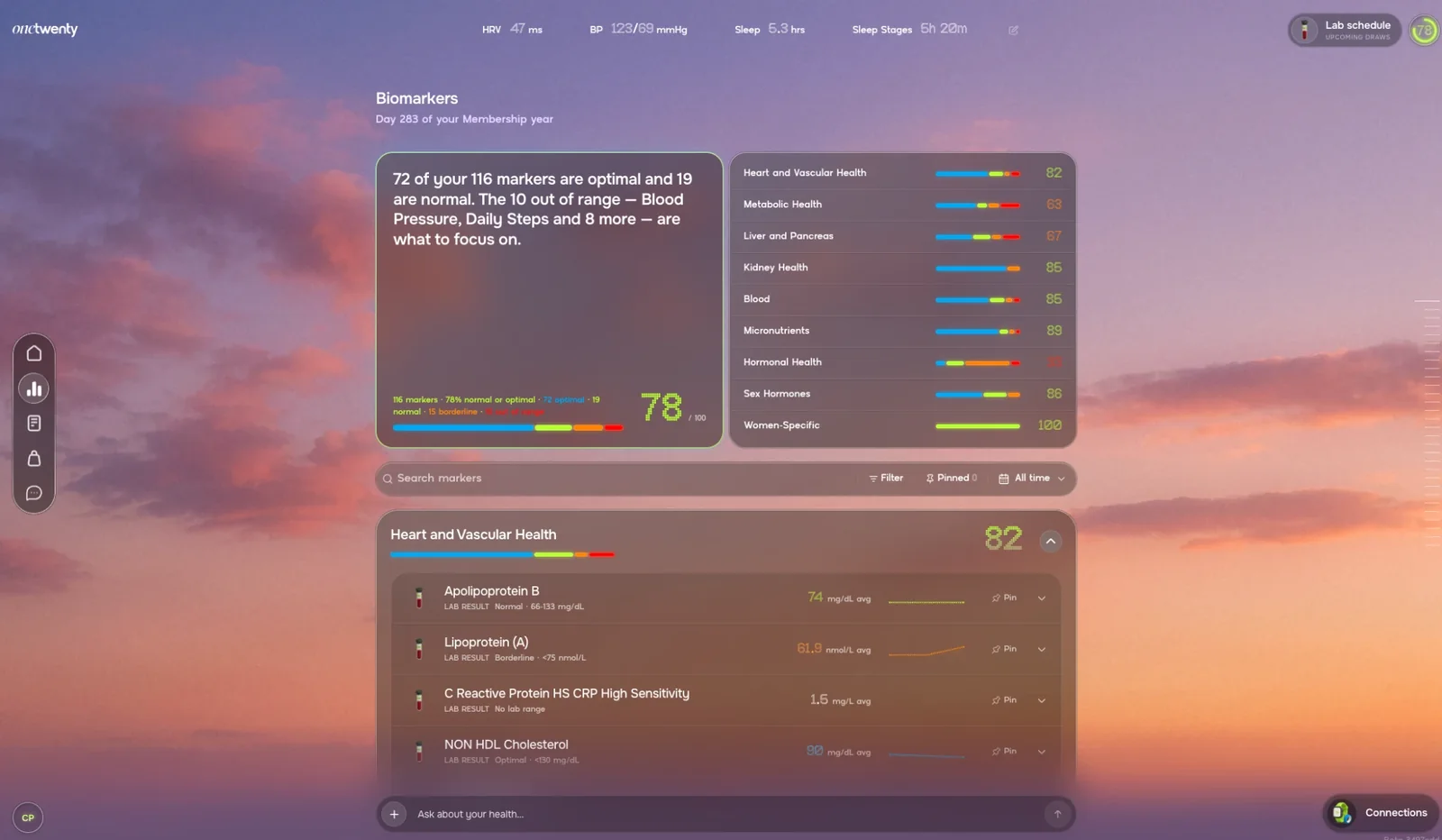
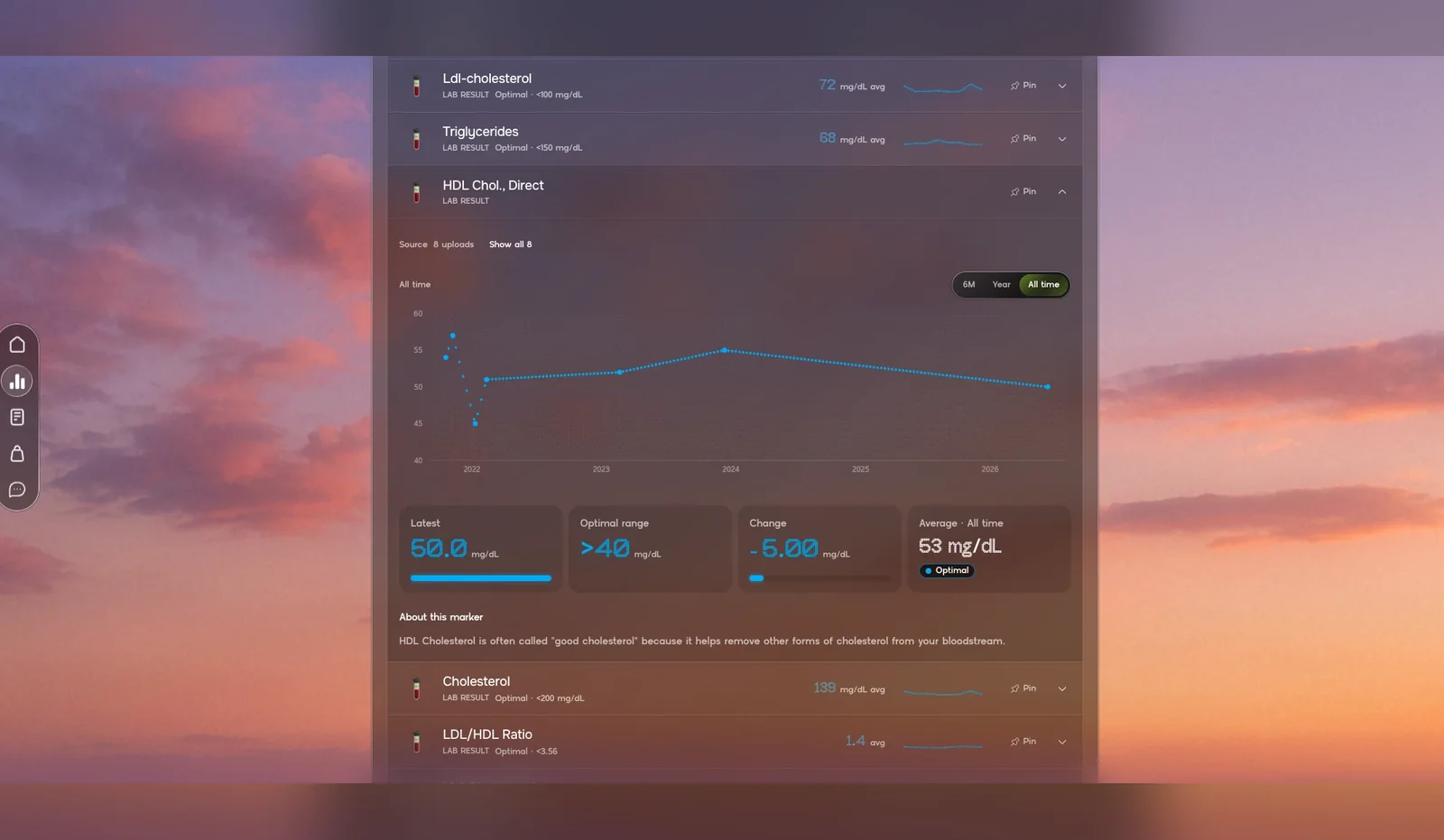
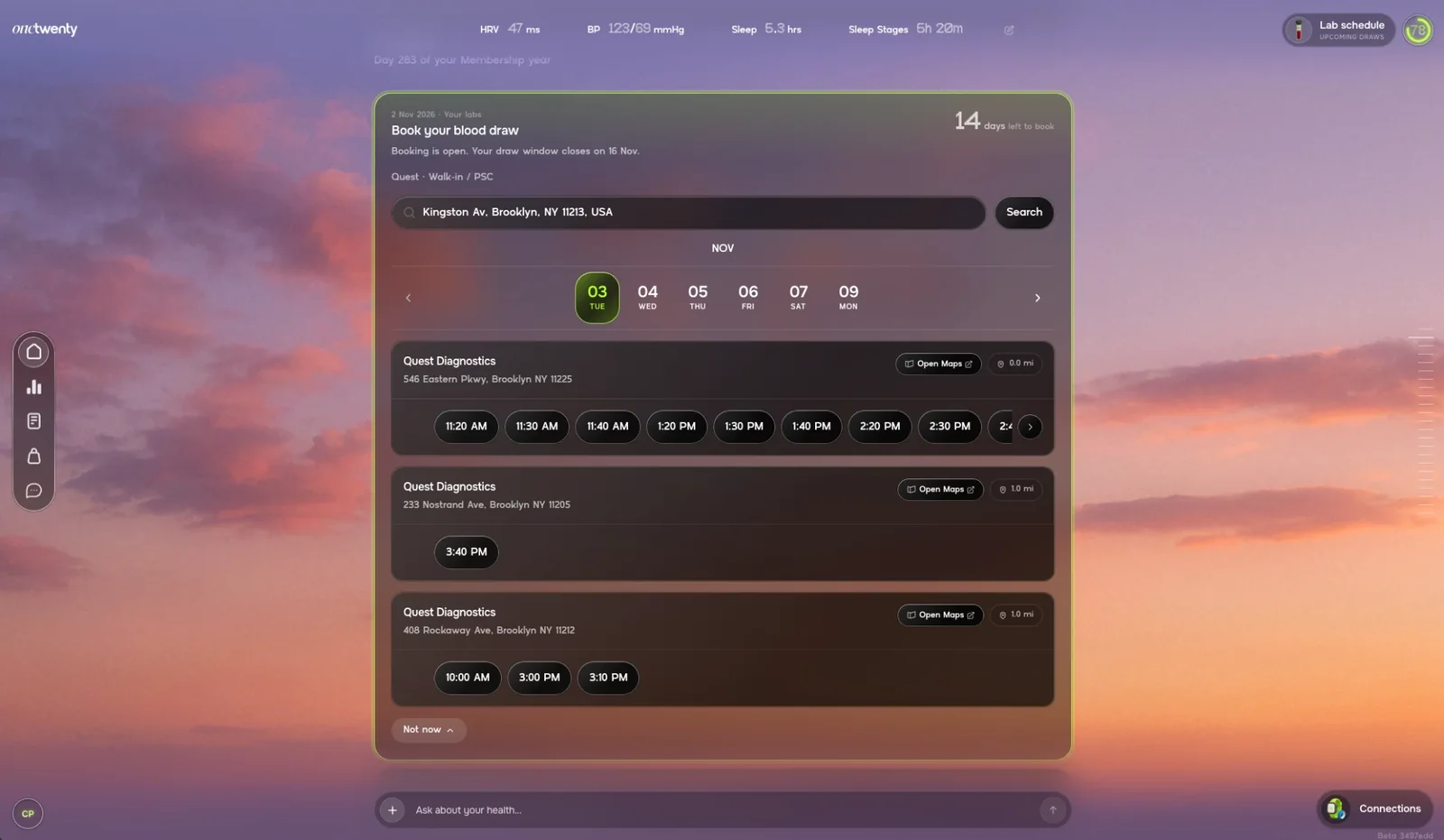
OneTwenty is not ranked above because it is not an at-home test. Every draw happens at a lab near you, and it takes about ten minutes. We include it because many people searching for an at-home test are not avoiding the needle. They are avoiding the hassle, and a kit costs them most of the picture to do it.
If a short lab stop is acceptable, the trade is a good one. The first panel covers 101 lab markers, about four times what Rythm's kit measures. Three follow-up panels of 20 to 40 markers come after it, about one every 90 days, chosen from what came back off or what you are trying to change. All four are in the $499 membership, which is roughly what four kits cost once shipping is added.
The baseline a kit skips
The first panel covers 101 markers, so you find out what needs watching before you start watching it.
The retests are included
Three follow-up panels are in the membership, one about every 90 days. A change you make in January is measured in April.
Follow-ups chosen from your results
Each follow-up tests 20 to 40 markers picked from what was off, not the same fixed list every time.
Data between the draws
22 device metrics tracked daily sit beside your labs, with a health coach on every panel.
It is the wrong choice if staying home is the whole point. In that case pick from the six above. It is available in every state except Rhode Island, at $749 in New York and New Jersey.
See how OneTwenty worksWhat a Year of At-Home Testing Costs
Headline prices are not comparable, because some of these charge once a year and others charge every time a kit ships. Here is each one priced as a full year.
| How you use it | Tests a year | Markers | Cost of the year |
|---|---|---|---|
| Rythm Health, every month | 12 | 25+ each time | $948 at list, about $1,200 delivered |
| Rythm Health, every quarter | 4 | 25+ each time | $316 at list, about $400 delivered |
| SiPhox Health, base panel every quarter | 4 | 14 to 29 each time | $496 plus shipping |
| SiPhox Health, top panel twice a year | 2 | 60+ each time | $498 plus shipping |
| Function Health, with home visits | 2 | 100+, then 60+ | $365 plus an unlisted visit fee |
| Superpower, with a home visit | 1 or 2 | 100+ per draw | $199 to $349 plus a visit fee |
| For comparison: OneTwenty, drawn at a lab | 4 | 101, then 20 to 40 three times | $499 |
The kits look cheap per test and are not cheap per year. Rythm at $79 becomes about $1,200 when you use it the way it is designed. Used quarterly it is about $400, which is the sensible way to buy it unless you are tracking something closely. SiPhox says its shipping runs about $25 a kit, which puts four base panels near $600.
A home visit is an add-on almost everywhere. Quest charges $99. Function Health and Superpower do not publish theirs, so get the figure for your address before you compare.
You pay for staying home in markers, not only in dollars. A year of quarterly kits costs about the same as a year of lab panels, and never includes the broad baseline. That is a fair price for convenience. It is worth knowing you are paying it.
Are At-Home Blood Tests Accurate?
The laboratory side is rarely the weak point. Rythm runs its own lab with a physician signing off each report, SiPhox uses CLIA and CAP accredited labs, Everlywell uses CLIA-certified labs with clinician review, and the home-visit services send your sample to the same national labs a doctor's office uses.
The weak point is collection. A phlebotomist fills a tube from a vein the same way every time. When you collect your own sample, two things can go wrong that a professional draw avoids:
- Too little blood. A sample that comes up short can be rejected, and you start again with a new kit.
- Too long in the post. Some markers degrade in transit, and a delayed sample can come back with results missing. Collect early in the week and send it the same day.
Published studies of upper-arm devices show capillary samples tracking venous draws closely for many routine tests, so a kit is a reasonable way to follow a trend. Treat a single surprising number from any self-collected sample as a reason to retest with a venous draw, not as a diagnosis. That applies to every service on this list: results are information to take to a clinician, not a verdict.
How to Choose
- Is a needle in a vein the thing you are avoiding? Then you want a kit: Rythm Health for speed and price, SiPhox Health for breadth.
- Is it the lab visit you are avoiding? Then a home visit solves it and you keep the broad panel. Function Health, Superpower and Quest all list one. Check that it covers your address before you pay.
- Have you had a broad panel in the last year? If not, a 25-marker kit is a narrow place to start. A home-visit draw, or a lab membership if you will make the trip, tells you which markers deserve tracking.
- Do you have one question? Buy one test. Everlywell if a finger prick suits you, Quest if you want a venous result.
- How often will you really test? A kit is billed every time it ships. Decide the number of tests before you subscribe and multiply.
- Do you live in New York or New Jersey? Prices and panels differ there for most of these. Get the real quote at checkout.
Frequently Asked Questions
What is the best at-home blood test?
For most people it is Rythm Health: 25+ markers from a sample you collect yourself, results in under 48 hours, at $79 a test plus shipping and tax, in every state except Rhode Island. SiPhox Health tests more markers from a self-collected kit, and Function Health and Superpower offer a broader lab-grade panel with a home visit in some areas.
Are at-home blood tests accurate?
The labs are held to the same certification standards as other clinical labs. The risk is in collection. A self-collected sample can be rejected for too little blood or lose markers if it is delayed in transit. A phlebotomist drawing from a vein at your home avoids both, which is why the broadest panels use one.
How much does an at-home blood test cost?
A single-topic finger-prick kit from Everlywell runs $49 to $249. Rythm Health is $79 a test plus shipping and tax, and SiPhox Health is $124 a test plus shipping. Memberships with a lab-grade draw run from $199 to $365 a year, plus a home-visit fee where one is offered. Quest charges an additional $99 for its in-home visit.
Can someone come to my house to draw blood?
Yes, in some areas. Quest Mobile sends a phlebotomist for an additional $99 where its in-home service is available. Function Health offers concierge draws at home or at work in select areas, and Superpower has listed a home visit as a paid add-on.
Is a finger prick as good as a blood draw?
For a few routine markers it can be close. It collects far less blood, though, so a finger-prick kit measures only a handful of things. An upper-arm device collects more, and a venous draw collects enough for 100 markers or more.
Do I need a doctor's order?
Not one of your own. Each of these services arranges the order for you. Quest, for example, says no doctor visit is required to buy, and an independent healthcare provider is involved in the process.
Does insurance cover at-home blood tests?
Generally no. These services are paid for directly and do not bill insurance. Rythm Health, SiPhox Health, Function Health and Superpower all describe themselves as HSA and FSA eligible, and Everlywell accepts HSA and FSA cards, so you can often pay with pre-tax dollars.
How often should I test?
Often enough to see whether a change worked. For many markers that is about every three months, which is long enough for a real shift and short enough to stay on track. Monthly testing is mostly useful when you are watching one specific marker closely.
Does an at-home test replace my doctor?
No, and none of these companies claims it does. Use the results to have a better-informed conversation with your physician. If you would trade the kit for a short lab visit to get a full baseline and three retests in one membership, OneTwenty is the one we point readers to.
Final Verdict: The Best At-Home Blood Test
Decide what "at-home" means to you and the list sorts itself. If it means no needle in a vein, buy a kit: Rythm Health if you want speed and the lower price, SiPhox Health if you want more markers each time. If it means one quick answer, buy a single test from Everlywell or Quest.
If it means a broad picture of your health without a waiting room, you want a venous draw at your door. Function Health and Superpower are strong value where their home visits reach you, and both leave long gaps between tests.
Rythm Health is our overall pick because it is the one most people will actually use: nothing to book, no vein, results in two days, and a cost you control one test at a time. Its limit is that it only ever shows you 25 markers. If you are willing to visit a lab to see the rest, OneTwenty covers a 101-marker baseline and three follow-ups for $499 a year, and that is the alternative we would look at first.
Willing to trade the kit for a short lab visit?
OneTwenty is not an at-home test: each draw is at a lab near you. In exchange you get one full 101-marker panel and three targeted follow-ups a year, daily device data and a health coach on every panel. Available in every state except Rhode Island. $499 a year, $749 in New York and New Jersey.
Get started with OneTwenty