For most of 2025 this was an easy comparison to write. Function Health cost $365 a year and drew your blood twice; Superpower cost $199 and drew it once. Depth against price, and you picked a side.
That gap has closed. Superpower now charges $349 a year and includes two draws, testing 150+ biomarkers across a baseline panel and a follow-up retest. Function charges $365 for two draws and 160+ tests. Same lab network, same rough price, same number of needles. The decision has moved somewhere else entirely, and this comparison is about where.
Function Health vs Superpower
The Quick Verdict
Price is no longer the reason to choose between these two. $349 against $365 is a rounding error on a year of healthcare, and both now include two blood draws through Quest with a comparable number of markers. Anyone still recommending Superpower because it is the cheap one is working from last year's pricing.
Superpower is the more complete product. It reads your Oura, Whoop and Apple Health data, sells you supplements at a member price, and prescribes, including GLP-1 and TRT, with medications billed separately. When a marker comes back wrong, something can actually happen on the platform.
Function is the more independent one. It has slightly more markers, clinician-written summaries that connect results to each other rather than listing them, and a physician who calls you directly if something urgent turns up. It sells you nothing, which is a real editorial advantage when the subject is what supplements you should take.
That last point is the honest tension. Superpower recommending a supplement it also sells you is convenient and conflicted at the same time. How much that bothers you is most of this decision.
Function Health vs Superpower vs OneTwenty: Comparison Chart
| Function Health | Superpower | OneTwenty | |
|---|---|---|---|
| Annual price | $365 | $349 | $499 |
| Price in NY & NJ | $600+ | Varies, check at checkout | $749 |
| Blood draws included | 2 per year | 2 per year | 4 per year: 1 full, 3 targeted |
| Biomarkers | 160+ across the year | 150+ across the year | Full baseline panel, then targeted follow-ups |
| How the draws split | 100+ markers, then 60+ after three to six months | ~90 at baseline, ~60 retested later in the year | One full panel, then three targeted follow-ups across the year |
| Cost per draw | About $183 | About $175 | About $125, but three of the four draws are targeted |
| Lab network | Quest, 2,000+ locations | Quest, 2,000+ locations, at-home for a fee | Quest |
| Results turnaround | 7 to 10 business days | About a week | Typically about a week |
| Clinician review | Yes, written summary plus a call if urgent | Yes, 24/7 care team messaging | Yes, licensed clinicians |
| Wearable data | No | Syncs Oura, Whoop, Apple Health | 22 daily device metrics, drives the protocol |
| Supplements | Not sold | Member-priced marketplace | Lab-matched protocol included |
| Prescriptions | No | Yes, including GLP-1 and TRT, billed separately | Yes, through licensed clinicians |
| Add-ons | MRI about $899, Galleri cancer screening | Gut, toxins, cancer screening, peptides | Included in the protocol |
| Plan updates | Twice a year, after each draw | Twice a year, plus wearable data in between | Every 90 days |
| HSA / FSA | Eligible | Eligible | Eligible |
What You Actually Pay Per Blood Draw
Both memberships now include two draws, so for the first time the annual prices are directly comparable. Divide them out anyway, because it is the only number that survives a change in what each plan includes.
| Platform | Annual price | Draws included | Cost per draw | Markers a year | Cost per marker |
|---|---|---|---|---|---|
| Superpower | $349 | 2 | About $175 | 150+ | About $2.33 |
| Function Health | $365 | 2 | About $183 | 160+ | About $2.28 |
| OneTwenty | $499 | 4 (1 full, 3 targeted) | About $125, not like for like | 95+ at baseline, then 20 to 40 markers at each follow-up | Not comparable |
Superpower is about $8 cheaper per draw. Function is about half a cent cheaper per marker. Both differences are noise. If you are choosing on price you are choosing on nothing, which is the most useful thing this table has to say.
The number that is not noise is OneTwenty's. $499 covers four draws, one full panel and three targeted follow-ups, so the roughly $125 a draw is not like for like with a full panel, but it buys twice as many chances a year to see whether a change worked.
If you live in New York or New Jersey, check before you subscribe
State lab regulations push prices up across this whole category, and the two platforms handle it differently on their own sites. Function publishes a figure: $600 or more a year for New York and New Jersey residents, which nearly doubles its cost per draw to around $300.
Superpower's pricing page no longer publishes a separate number. It says only that pricing may vary for members in New York and New Jersey. Check the price you are actually quoted at checkout rather than the headline. For readers here in Brooklyn this is the single most important line in the article.
Function Health, In Detail
Function Health was founded in 2022 by Dr. Mark Hyman, a leading voice in functional medicine, and tech entrepreneur Jonathan Swerdlin. The pitch is early detection: monitor the markers a routine physical skips, rather than waiting for symptoms.
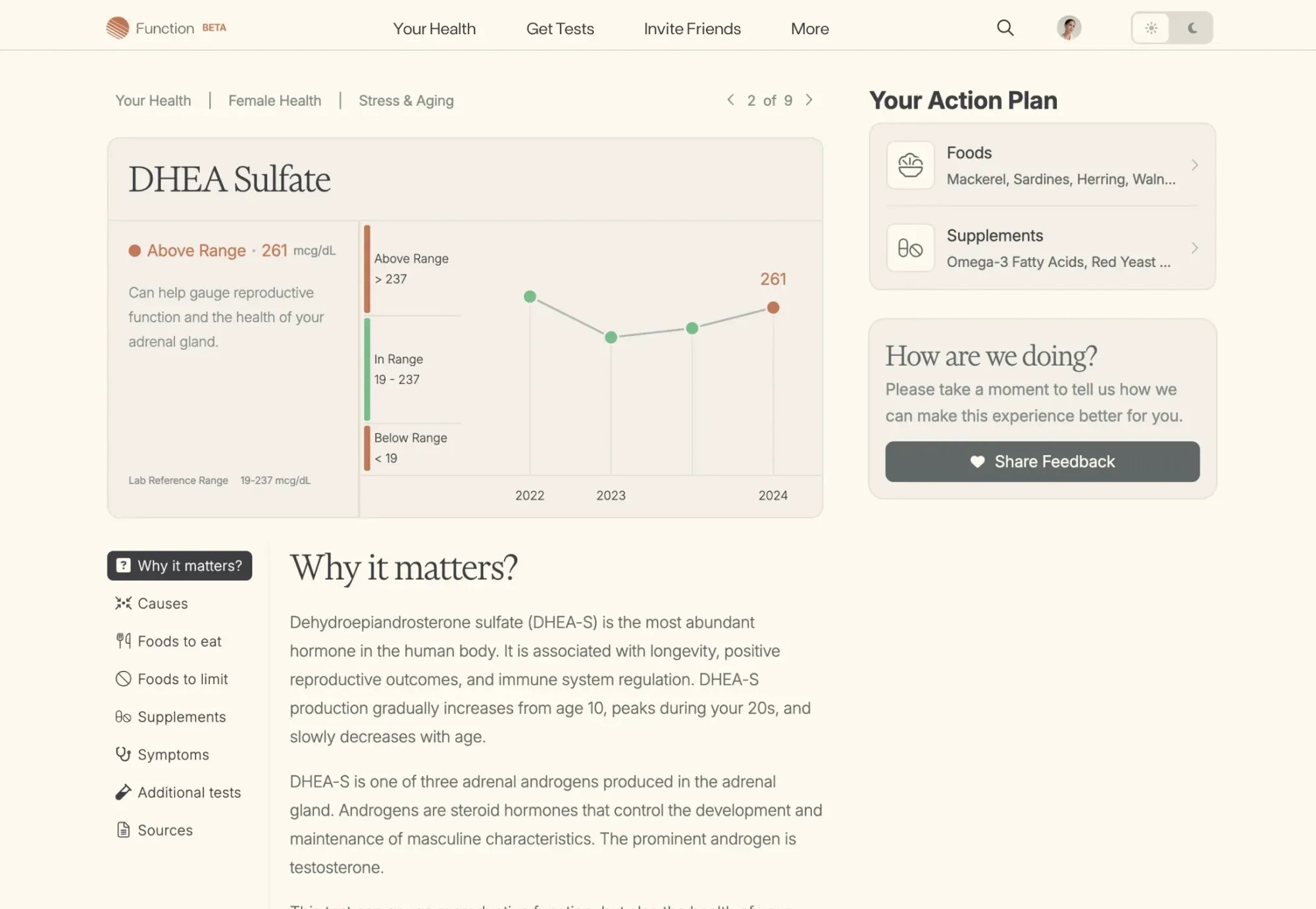
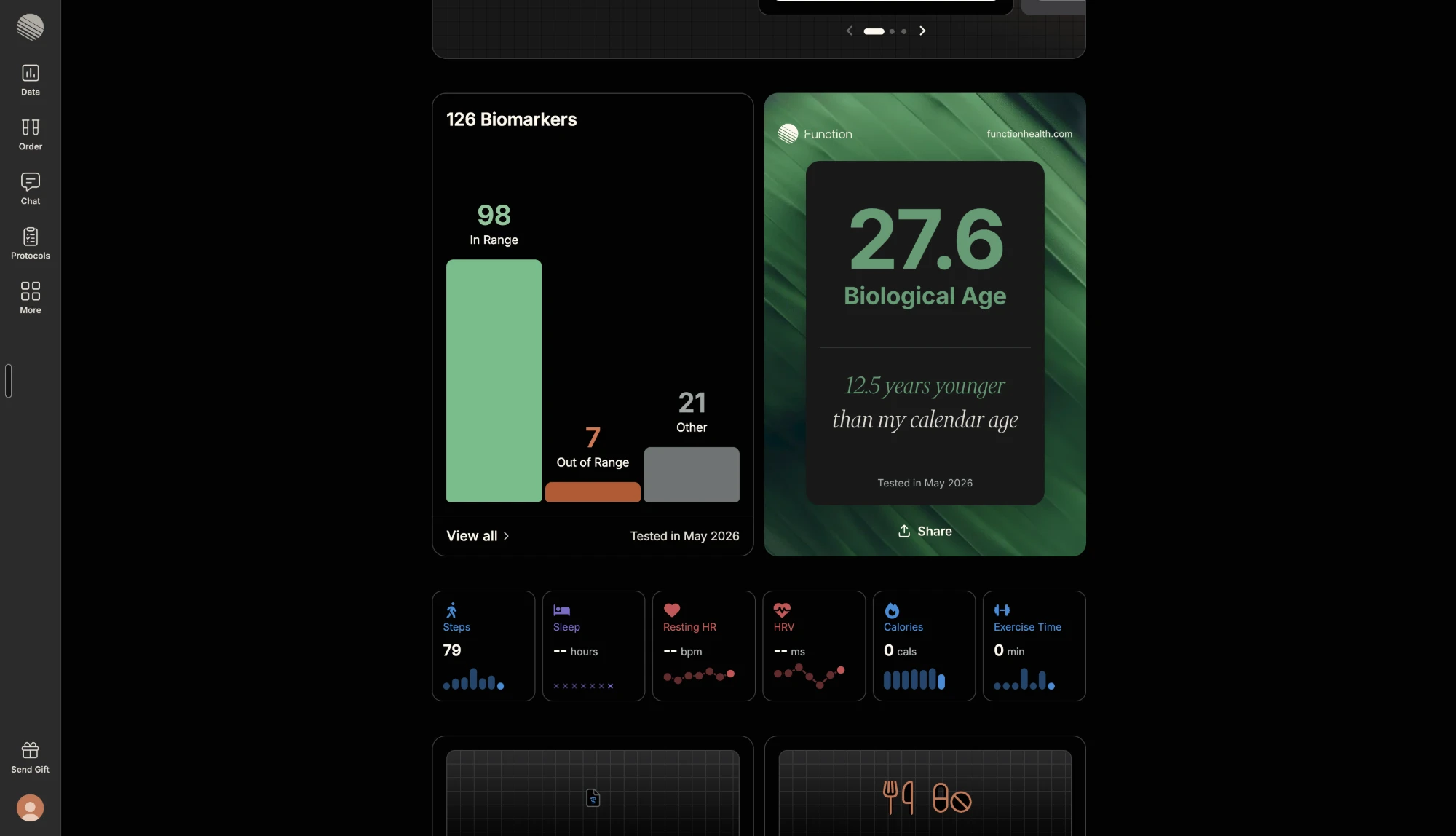
- 160+ lab tests a year across two draws: a first panel of 100+ markers, then a follow-up of 60+ markers three to six months later.
- Quest Diagnostics handles the draws at more than 2,000 locations, with no doctor's order needed. Results land in 7 to 10 business days, with a fuller clinician summary a couple of weeks after that.
- Clinician-written summaries that connect markers to each other rather than listing them, with diet, supplement and lifestyle suggestions.
- A physician calls you directly if anything urgent turns up. It is the best single feature either platform has and Superpower does not match it.
- Private AI Chat, Protocols and a biological age score, all added since launch alongside a price cut from $499 to $365.
Where Function wins
- Slightly deeper panel, 160+ against 150+
- Clinician notes that interpret, not just report
- A physician call when something is urgent
- Sells you nothing, so no conflict on advice
- Marginally cheaper per marker
- Trend graphs across the two draws
Where Function falls short
- $600+ in New York and New Jersey
- No supplements and no prescriptions
- No wearable data at all
- Silent between the two draws
- MRI and cancer screening billed separately
- No longer the cheaper option per year
Function's weakness used to be framed as testing twice a year instead of continuously. Now that Superpower also tests twice, the sharper criticism is what it does not do after the results: no supplements, no prescriptions, no wearable data. It tells you what is wrong and hands the problem back to you.
Superpower, In Detail
Superpower launched in 2023 out of Los Angeles as the cheap entry point to comprehensive testing. It is not the cheap one any more. At $349 with two draws, prescriptions and a supplement marketplace, it has moved from undercutting the category to competing inside it.
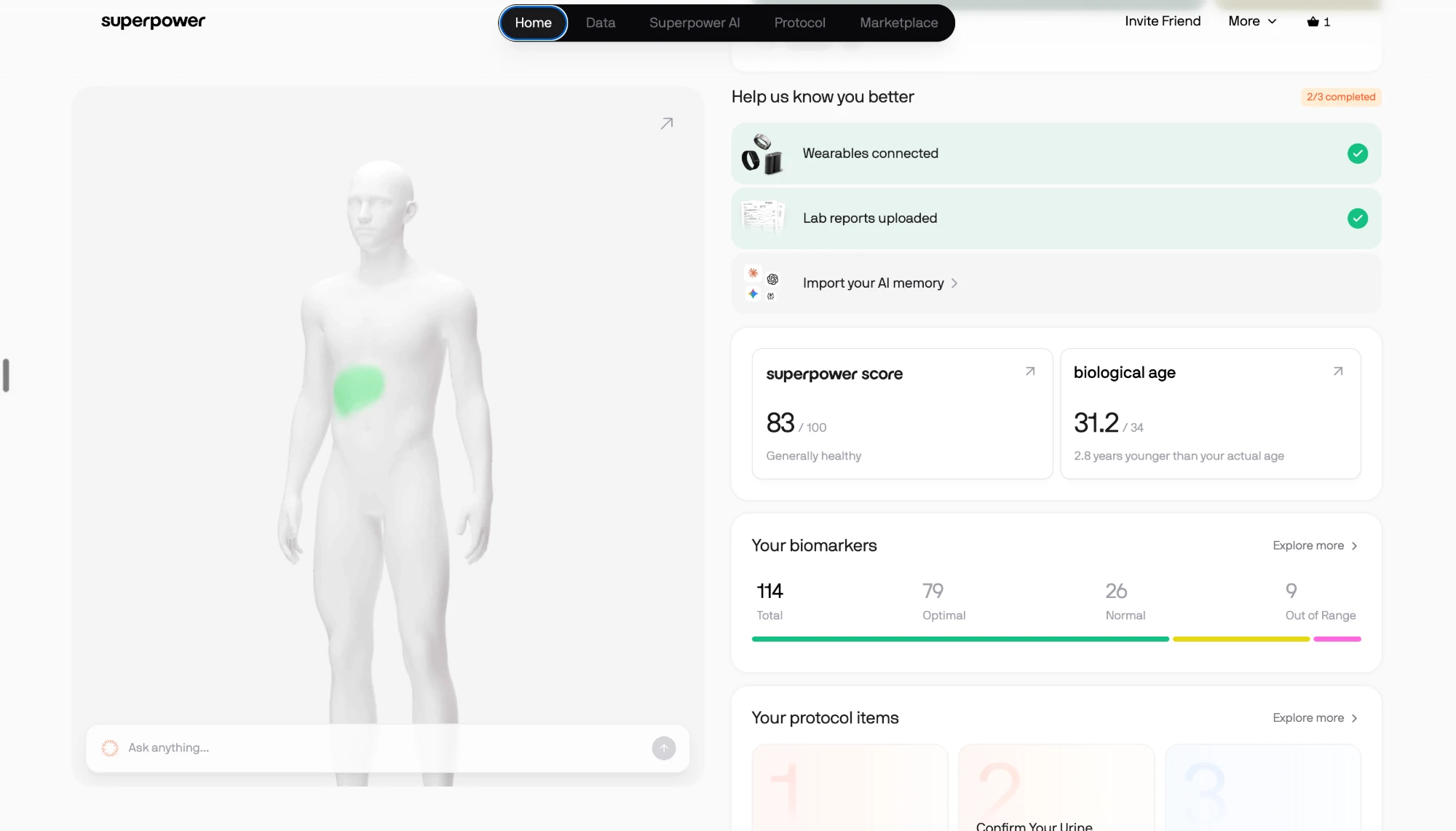
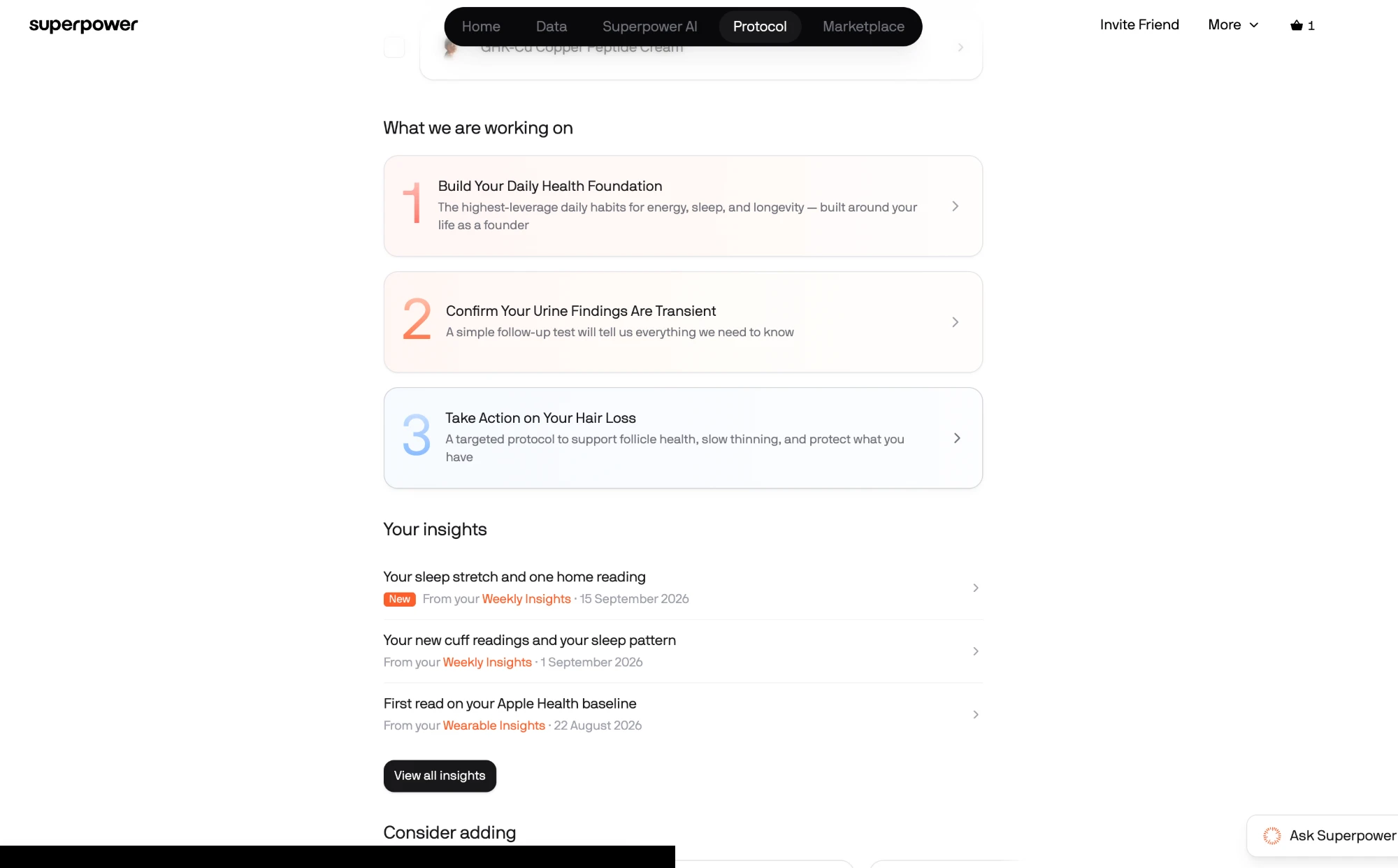
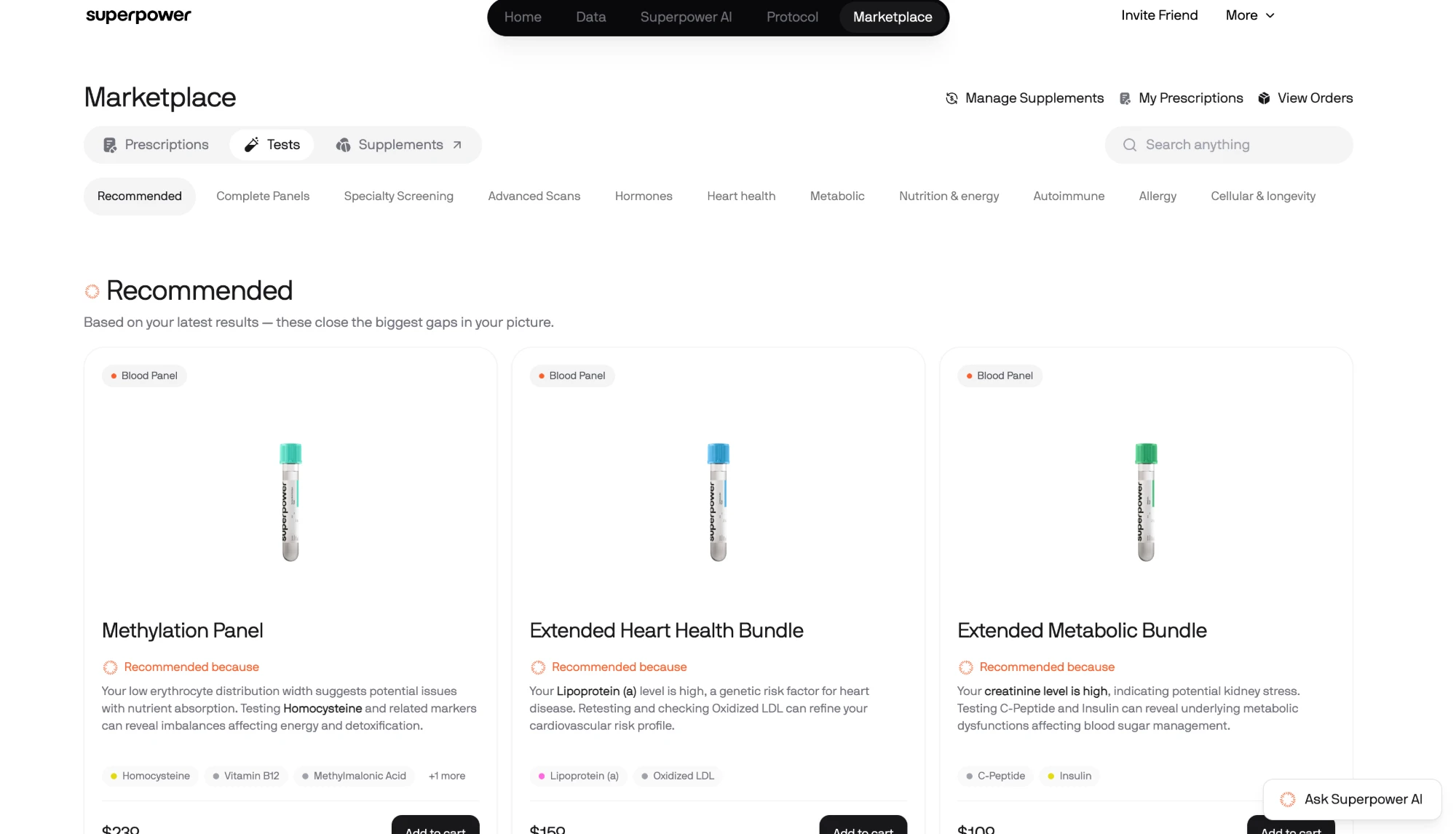
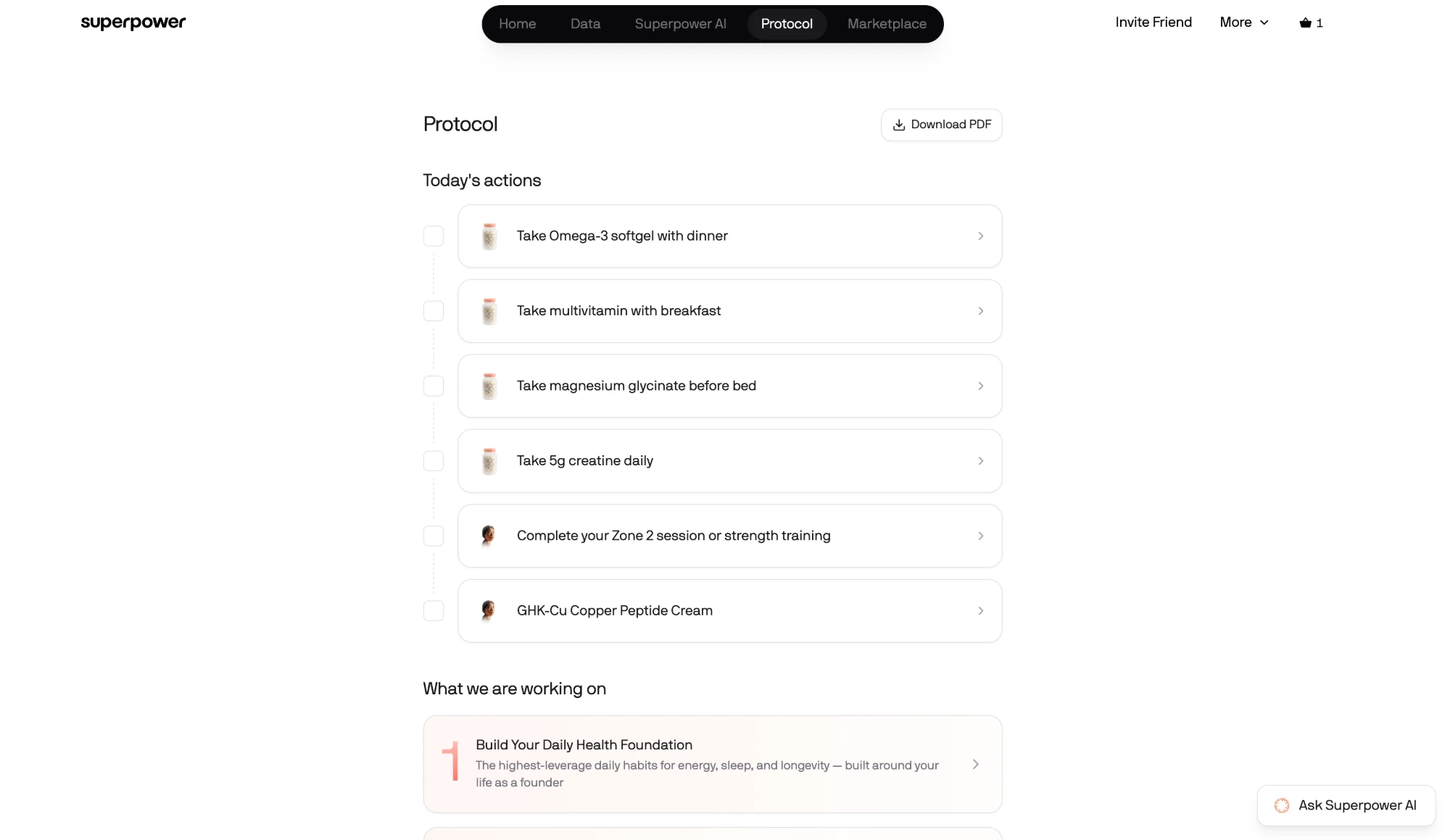
- 150+ biomarkers a year across two built-in draws: roughly 90 at baseline, then about 60 key markers retested later in the year, with results typically ready in about a week.
- A Superpower Score and a biological age, plus a Digital Twin view. More interpretation scaffolding than Function offers, though less written clinical judgement.
- Superpower AI, an in-app assistant trained on your results, with a human care team behind it.
- Wearable syncing with Oura, Whoop and Apple Health, and uploads of old lab PDFs so your history sits in one place.
- Supplements and prescriptions: one Marketplace with tabs for prescriptions, add-on tests and supplements, and prescription access that now includes GLP-1 and TRT, with medications priced separately from the membership.
- Add-on testing for gut health, environmental toxins, cancer screening and peptides, each billed on top.
Where Superpower wins
- $16 cheaper a year and about $8 cheaper per draw
- Prescriptions, including GLP-1 and TRT
- Supplements at a member price
- Wearables, which Function does not touch
- Friendliest dashboard of the two
- At-home draw available for a fee
Where Superpower falls short
- Recommends supplements it also sells
- Ten fewer markers across the year
- No published NY and NJ price to compare
- No physician call on urgent findings
- Add-ons and medications inflate the real total
- No longer the budget option it was known as
The thing to watch on Superpower is the gap between the membership and the bill. $349 buys the testing and the platform. The supplements it recommends, the prescriptions it writes and the add-on panels it offers are all separate charges, and the whole design nudges you toward them. That is not dishonest, it is just a different business model from Function's, and it is worth knowing which one you are buying into.
Where They Actually Differ Now
Testing, price and frequency have converged. Three real differences are left.
- What happens when a marker is wrong. Function explains it and suggests. Superpower explains it, sells you the supplement and can write the prescription. This is the whole comparison in one line.
- Who is reading your results. Function writes clinician summaries and calls you if something is urgent. Superpower leans on Superpower AI, its in-app assistant, with a care team behind it. One is more thorough, the other is more available.
- Whether the advice is independent. Function does not sell supplements, so it has no reason to recommend one. Superpower does. Convenience and conflict arrive together.
Who should pick which
Pick Superpower if you want the results to turn into action without leaving the app, you already wear an Oura or a Whoop, or you think you may want a GLP-1 or TRT prescription. It is the more capable platform for most people at this price.
Pick Function if you want the deepest panel and the most careful human reading of it, you would rather buy supplements on your own judgement, and you value a physician who calls when something looks wrong.
Pick neither if what you actually want is to know whether the plan is working. Two draws a year cannot tell you that, on either platform.
If Twice a Year Is Not Enough: OneTwenty
OneTwenty
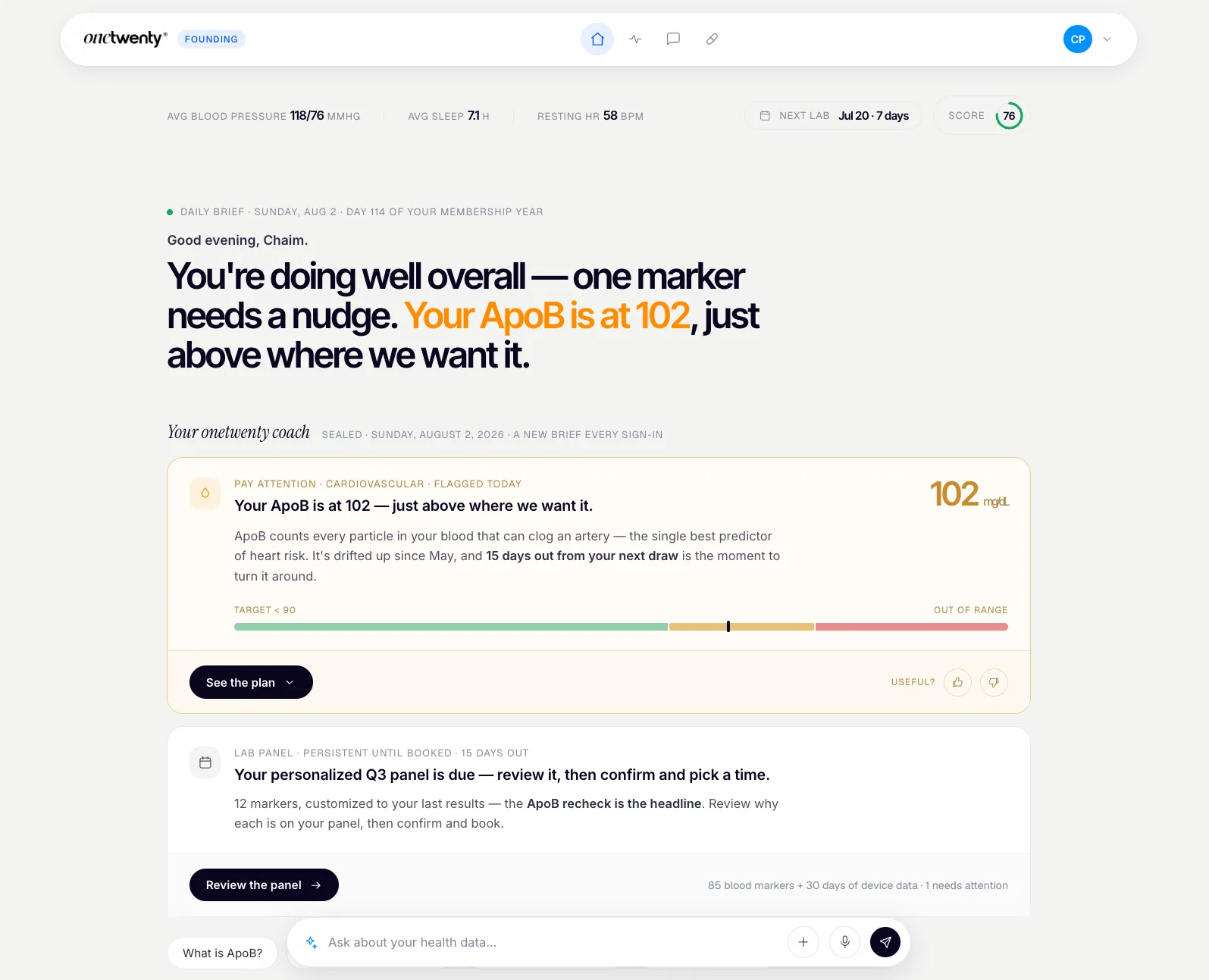
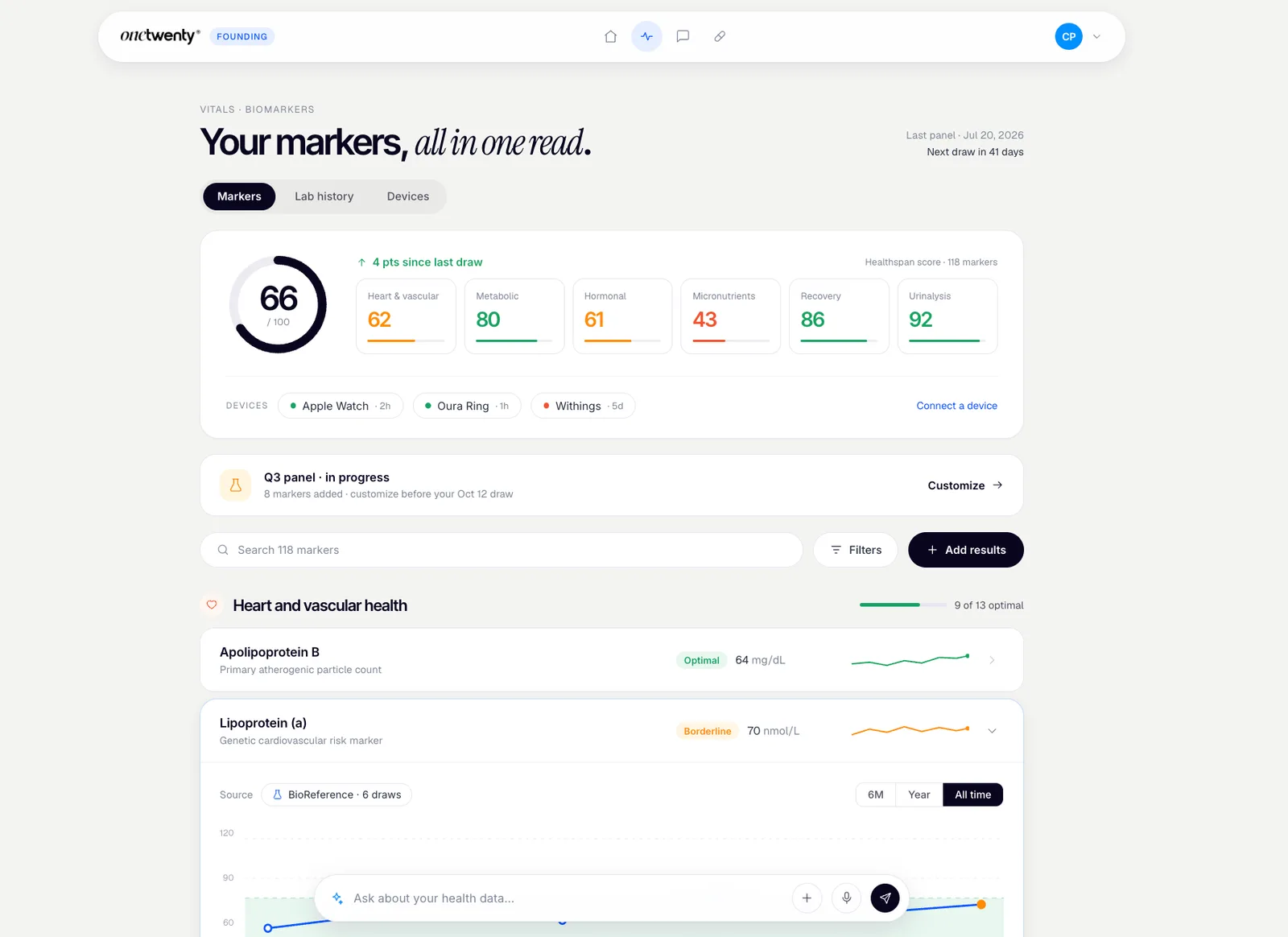
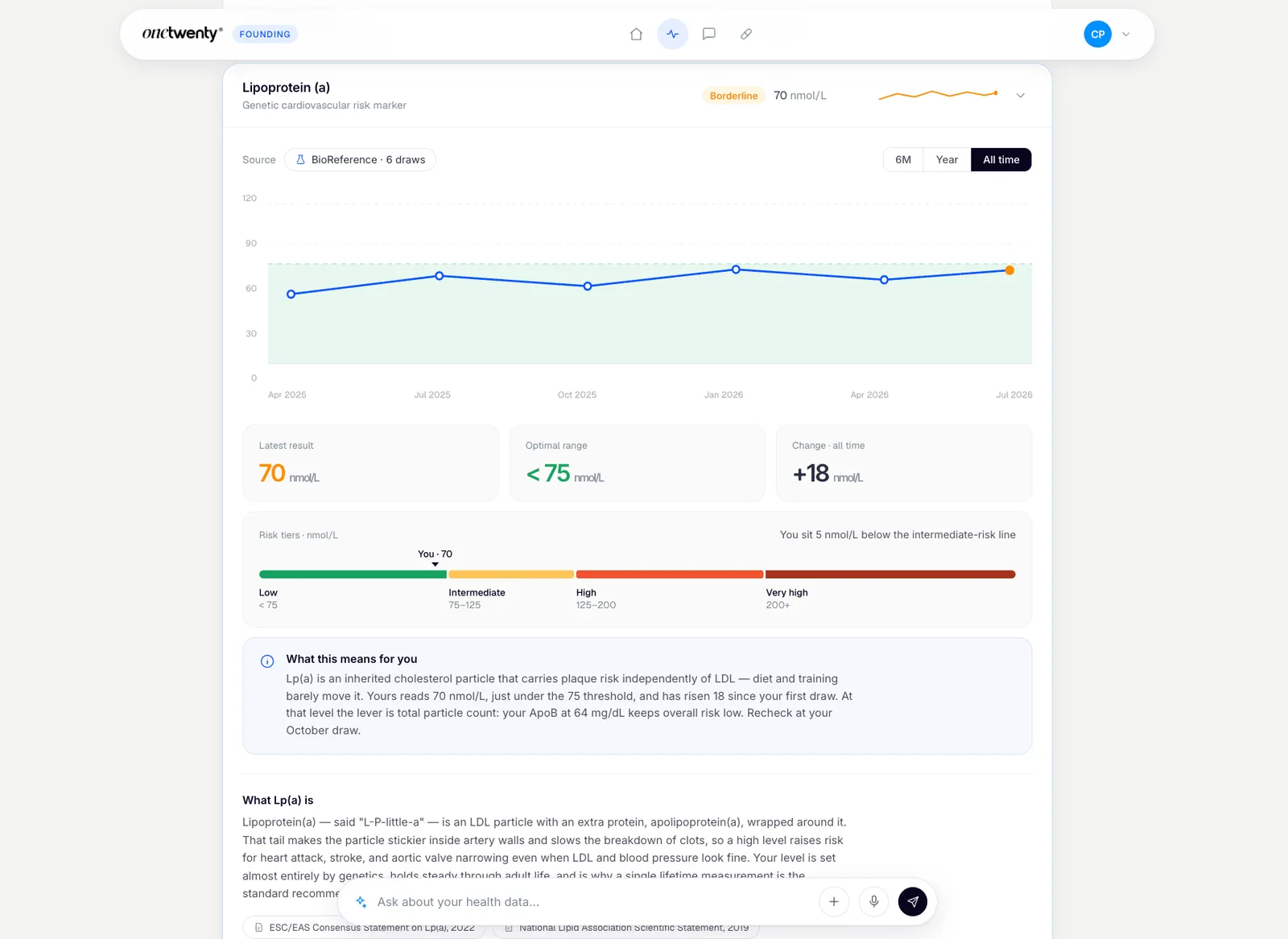
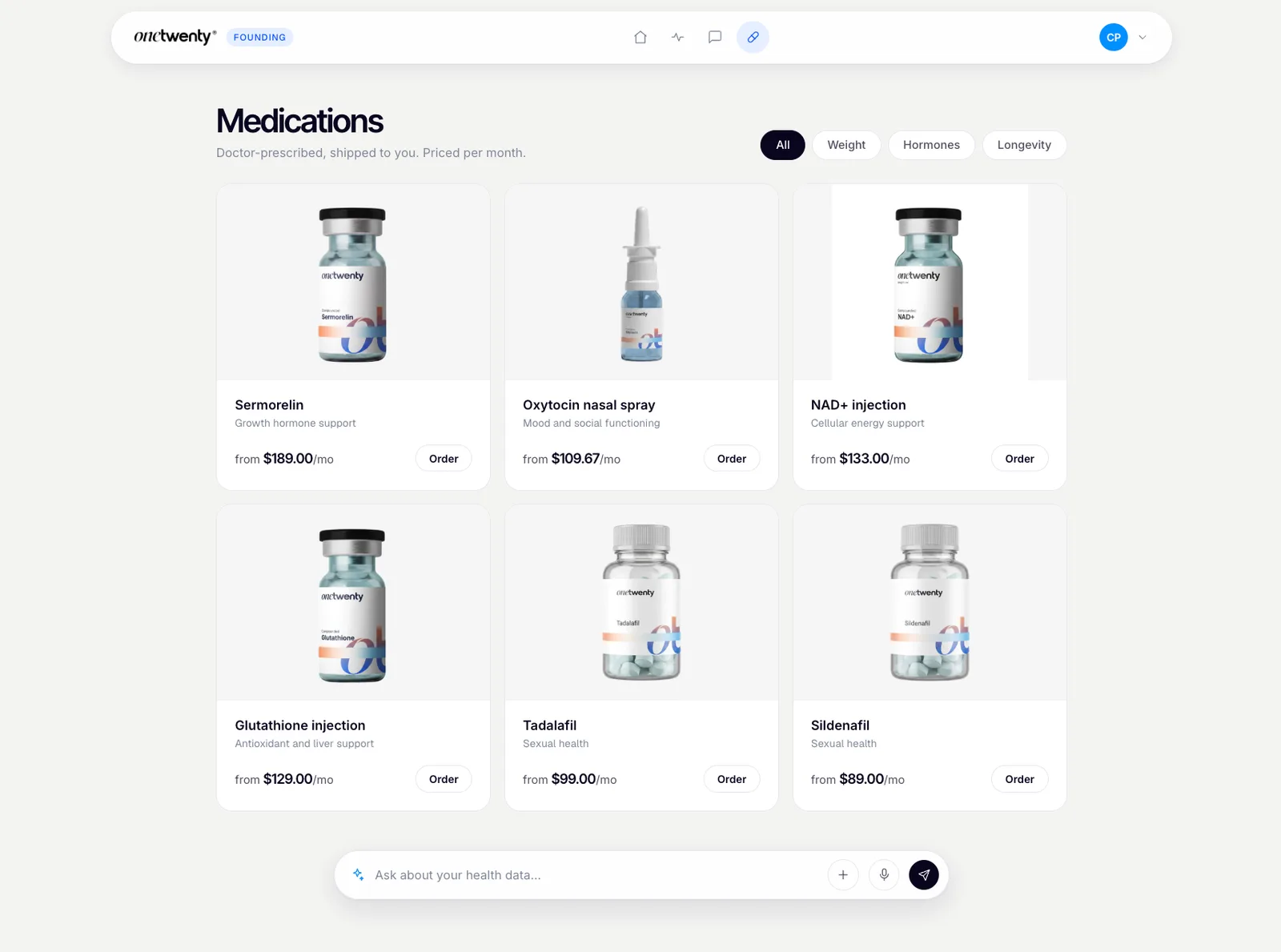
Now that Function and Superpower both test twice a year, the open question is no longer how much testing costs. It is whether two readings are enough to tell you anything. Change something in January, test in June, and you have one comparison a year to work from. OneTwenty includes one full panel and three targeted follow-ups for $499, continuous wearable data, a supplement protocol built from your own results and prescription access through licensed clinicians, with the whole protocol re-optimized every 90 days. It is available in every state except Rhode Island, at $749 in New York and New Jersey.
Four draws, not two
One full panel and three targeted follow-ups are in the membership, so a change you make in January is measured in April rather than next year.
Four draws for the price of two
$499 covers one full panel and three targeted follow-ups, against two full draws for $349 or $365. More readings a year, not cheaper full panels.
The protocol is the product
Supplements formulated from your labs and prescriptions when the labs call for them, included rather than sold to you a la carte.
Data between the draws
22 device metrics tracked daily feed the protocol, so the plan moves on evidence rather than waiting for the next panel.
How to Choose
- Do you want the platform to act, or to advise? Superpower acts. Function advises. Now that price and frequency match, this is the question that decides it.
- Do you already wear a tracker? If Oura, Whoop or Apple Health is already on your wrist, Function ignores it entirely and Superpower does not.
- Do you want supplement advice from someone who sells supplements? There is no right answer, but decide it deliberately rather than by accident.
- Do you live in New York or New Jersey? Get the real quoted price for both before comparing. Function publishes $600+; Superpower says only that pricing varies.
- How will you know if it worked? Two draws a year is one comparison a year. If that is not enough, neither of these is the answer.
Frequently Asked Questions
Is Function Health or Superpower better in 2026?
They are close enough that price should not decide it. Superpower is $349 a year, Function $365, and both include two blood draws through Quest. Superpower is the better product after the results, with wearable syncing, a supplement marketplace and prescriptions including GLP-1 and TRT. Function has a slightly deeper panel, clinician-written interpretation, a physician call on urgent findings, and no products to sell you.
How much does Superpower cost now?
$349 a year, up from $199. That now covers two blood draws rather than one, testing 150+ biomarkers across a baseline panel and a follow-up retest. Superpower's pricing page says pricing may vary for members in New York and New Jersey without publishing a figure, so check what you are quoted at checkout.
Which is cheaper per blood draw?
Superpower, at about $175 against Function's $183. Both include two draws a year, so the annual prices are directly comparable for the first time. The $8 difference is not a reason to choose either one.
How many biomarkers does each one test?
Superpower says 150+ across the year: roughly 90 at baseline and about 60 retested later. Function says 160+ lab tests: 100+ on the first draw and 60+ on the follow-up three to six months later. Both figures come from the companies themselves.
Can either one prescribe medication?
Superpower can, including GLP-1 and TRT, with medications priced separately from the $349 membership. Function Health does not prescribe at all.
Do they use the same labs?
Both run through Quest Diagnostics at more than 2,000 locations, with no doctor's order needed. Superpower also offers at-home testing for an additional fee.
Are they HSA or FSA eligible?
Both are, and neither is billed to insurance, so you can usually pay with pre-tax dollars.
Does either one replace my doctor?
No, and both say so. Use the results to have a better-informed conversation with your physician, not instead of one.
Final Verdict: Function Health vs Superpower
Both earn 4 out of 5, and they now earn it for nearly the same reasons. Two draws, a Quest network, 150 to 160 markers, a dashboard with a biological age on it, and a price inside $16 of each other. The old shorthand, Superpower for budget and Function for depth, is dead.
What is left is a genuine difference in philosophy. Function is a diagnostic with a clinician attached: it reads your blood carefully, explains it in writing, calls you if something is wrong, and sells you nothing. Superpower is a health platform with a diagnostic inside it: it reads your wearable, writes the prescription, stocks the supplement, and makes its money on what happens next. Pick the one whose incentives you are comfortable with.
Both share the same ceiling. Two blood draws a year give you one comparison a year, which is enough to spot a problem and not enough to manage one. That is the case for testing more often. OneTwenty includes a full panel and three targeted follow-ups at $499, four draws against two here, with the supplement protocol and prescriptions built into the membership rather than sold on top. If you want your health managed across the year rather than checked twice, that is the one that covers the whole job.
Want your health managed all year, not checked twice?
OneTwenty combines one full lab panel and three targeted follow-ups a year, daily wearable monitoring, a 24/7 AI Health Coach, a lab-matched supplement protocol and prescription access in one membership, with your protocol adjusted every 90 days. Available in every state except Rhode Island. $499 a year, $749 in New York and New Jersey.
Sign up here