
There are three ways to buy peptides in 2026, and they are not equal. You can buy "research" peptides from a website that skips the prescription, the pharmacy and the law. You can get medication only: a prescription peptide from a telehealth company, with no testing. Or you can get medication plus biomarkers: blood work first, a prescription written from your results, and retesting to see what changed. We think the third is the only one that makes sense, and this guide, updated November 6, 2026, explains why, then ranks the seven best legal peptide companies.
3 Ways to Buy Peptides, Compared
Research peptides
Vials sold online "for research use only, not for human consumption."
- PrescriptionNone
- Who makes itUnknown. No one checks purity, dose or sterility
- Lab testingNone
- DosingGuesswork from forums
- LegalIllegal to sell for human use
- CostCheapest per vial
Medication only
A telehealth prescription after a questionnaire or short visit, shipped by a pharmacy.
- PrescriptionYes, from a licensed clinician
- Who makes itA licensed compounding pharmacy
- Lab testingUsually none, or on you
- DosingA standard starting dose
- LegalYes, with a prescription
- CostAbout $99 to $300 per product
Medication + biomarkers
Blood work first, a prescription written from your results, then retesting.
- PrescriptionYes, written from your lab results
- Who makes itA licensed compounding pharmacy
- Lab testingBefore you start and while you take it
- DosingSet and adjusted from your numbers
- LegalYes, with a prescription
- CostOneTwenty: $499/yr with labs, peptides from $99/mo
What are research peptides?
Research peptides are vials of peptide powder sold online with a label that says "for research use only, not for human consumption." The label is how the seller avoids needing a prescription, a licensed pharmacy or FDA oversight, but the buyers are people who inject them. Nobody checks what is actually in the vial, how much of it, or whether it is sterile, and the dose comes from forums. Many of these sites also sell peptides the FDA still restricts, such as CJC-1295 and ipamorelin. In August 2026 the FDA sent warning letters to five research peptide sellers and rejected the "research use only" label as a legal defense.
Medication only
A telehealth company asks you some questions or holds a short video visit, a licensed clinician writes the prescription, and a licensed compounding pharmacy makes and ships the peptide. That is legal and the product comes from a regulated pharmacy. The gap is everything around it: most of these companies do not test you first, so the dose is not based on your body, and nobody measures whether the peptide is working or causing a problem.
Medication + biomarkers
You get blood work before anything is prescribed. A clinician reads your results, prescribes only if your numbers support it, and you are retested to see what changed. On sermorelin that means watching markers like IGF-1; on a GLP-1, glucose, lipids and more. You know your starting point, the dose follows your data, and you find out whether it worked.
A peptide is a medication. Taking one without a baseline and a recheck is guessing. OneTwenty builds the whole membership around this: a 95+ biomarker panel, three follow-up panels a year, your wearable and scale data read beside them, and a prescription only when your results call for one.
See OneTwenty PeptidesThe 7 Best Peptide Companies, Compared
Every company here is legal: a licensed clinician prescribes and a licensed compounding pharmacy fills it. We ranked them first on whether the prescription is built from your biomarkers, then on how many peptides they offer, published prices, reach and compliance record, including FDA warning letters. These are editorial rankings, not claims about clinical results.
| Company | Score | Peptides by prescription | Lab testing | Price | |
|---|---|---|---|---|---|
| 9.5 | Sermorelin, PT-141, GHK-Cu, GLP-1s | 4 panels a year, included | $499/yr, peptides from $99/mo | Get started | |
| 8.8 | Sermorelin, tesamorelin, PT-141, GHK-Cu, oxytocin | Required, from $450 | $299 intake, $80 to $200/mo | Visit site | |
| 8.3 | Sermorelin | $65 test before the first visit | $175/mo plus membership | Visit site | |
| 8.1 | Sermorelin, PT-141, GHK-Cu, BPC-157, TB-500, MOTS-c | Not required | Sermorelin $99/mo, no membership | Visit site | |
| 7.9 | Sermorelin, PT-141, oxytocin | On you | $55 consult, $249 to $300 per peptide | Visit site | |
| 7.4 | Sermorelin | Not required | $199.99/mo on a 6-month plan | Visit site | |
| 7.1 | Sermorelin | Not stated | From $99/mo | Visit site |
The Companies, One by One
OneTwenty
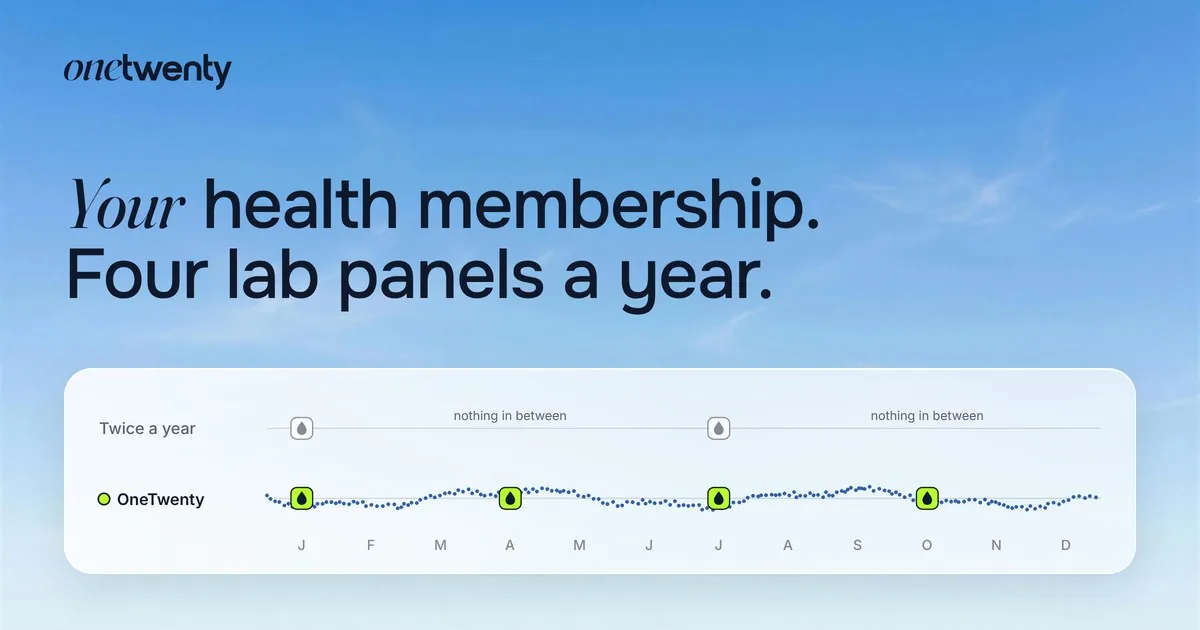
Every other company on this list sells you the peptide. OneTwenty sells you the picture the peptide should be prescribed from. The membership starts with a 95+ biomarker blood panel, then three targeted follow-up panels across the year at Quest locations, with your watch, ring, scale and blood pressure cuff read beside the labs. An independent licensed provider reviews the results and prescribes only where the numbers support it, and a licensed U.S. compounding pharmacy prepares and ships the medication.
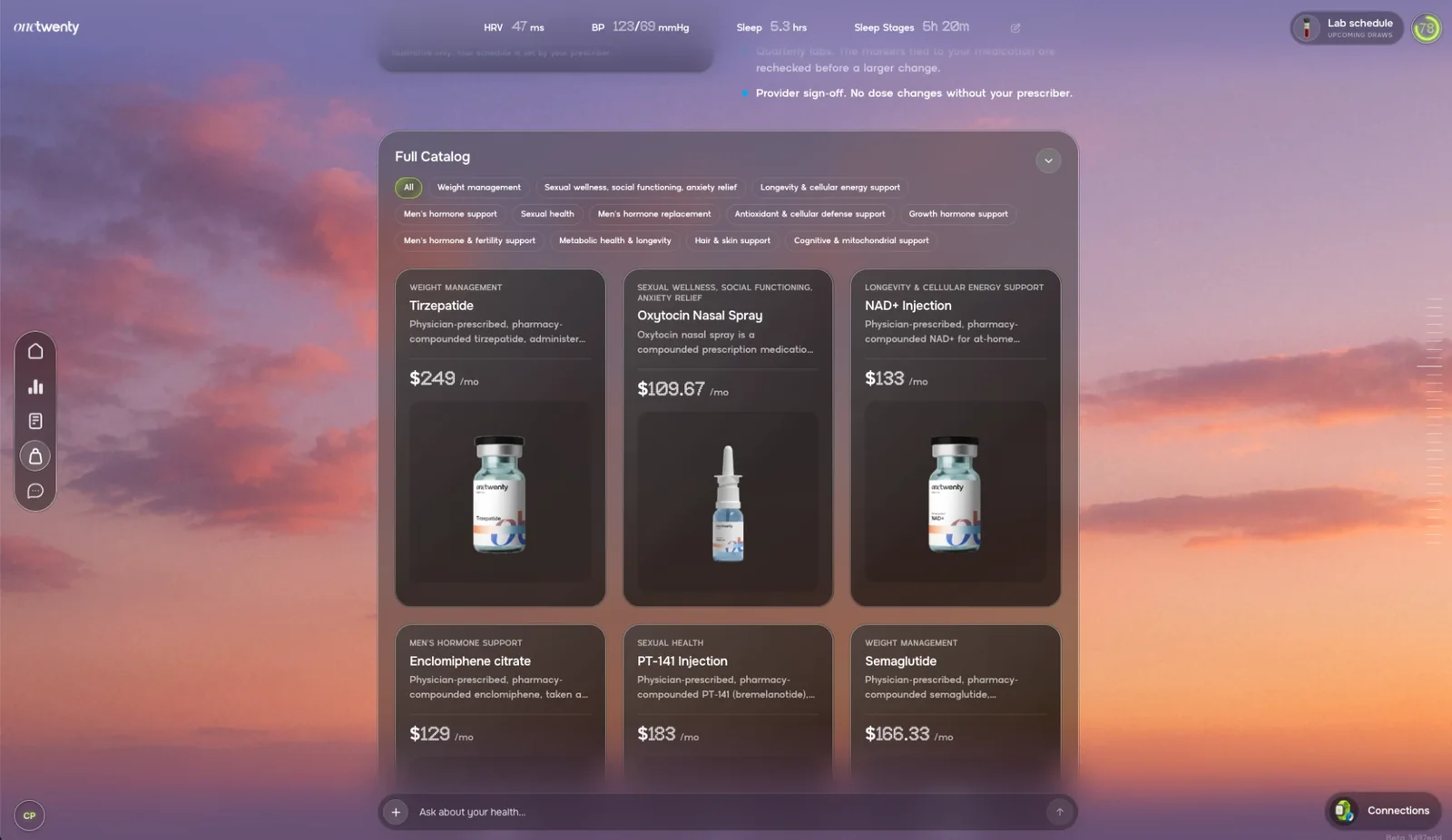
- Available now by prescription: sermorelin, PT-141, GHK-Cu cream, semaglutide and tirzepatide. Compounded versions are not FDA-approved.
- Coming soon: BPC-157, TB-500, MOTS-c, KPV, epitalon and Semax, as single-ingredient products once the HHS policy and pharmacy sourcing allow.
- Monitoring is built in: the follow-up panels are the blood work other companies bill separately, and the markers tied to a medication are rechecked before any larger dose change. You are not charged for a treatment until a clinician approves it.
Pros
- Prescription follows four panels a year, not a questionnaire
- Published prices for the membership and each treatment
- Device data read beside the labs
- Nothing charged until a clinician approves
What to know
- You join the membership first; it is not a one-off peptide order
- The six HHS-policy peptides are not shipping yet
- Not available in Rhode Island

Marek Health
Marek built its reputation on data: lab panels deeper than almost anyone in the category and a preventive approach rather than a refill service. Labs are required before treatment. Its prescription peptides are sermorelin, tesamorelin, PT-141, GHK-Cu and oxytocin, beside NAD+. There is no subscription; the cost is the intake, the labs and the treatment.
Pros
- Among the deepest lab work in the category
- Labs required before any prescription
- All states except Rhode Island, no subscription
What to know
- The most expensive start: intake and labs run $750 or more before treatment
- Follow-up labs are billed on top, not included
- Its site calls its compounding pharmacies "FDA-approved." Compounding pharmacies are licensed by states, not approved by the FDA
Hone Health
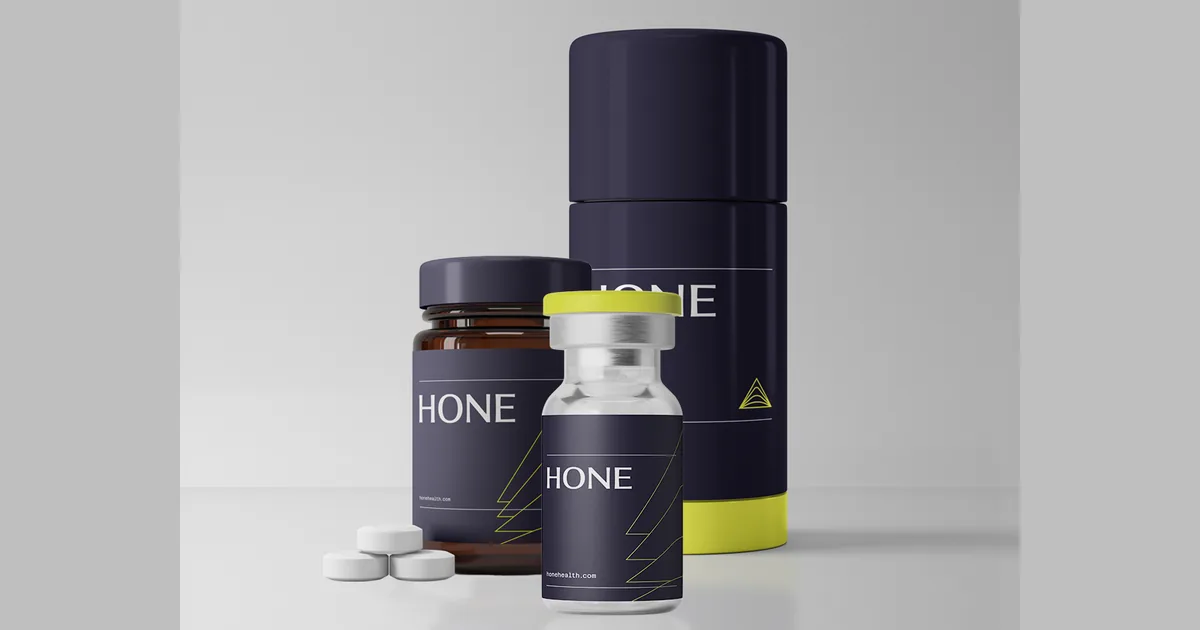
Hone starts with a $65 at-home lab test before your first visit, then a membership and treatment. Its peptide is sermorelin at $175 a month, beside NAD+ at $199 a month. It suits someone who wants a test before a prescription and does not need a broad menu.
Pros
- A lab test before the first visit
- LegitScript's official seal
- No FDA warning letter found
What to know
- Sermorelin is the only peptide
- One test up front, not a schedule of follow-up panels
- States served are not listed

AgelessRx
AgelessRx has the broadest prescription peptide menu on this list: sermorelin as an injection or a nasal spray, PT-141, GHK-Cu and NAD+, plus BPC-157, TB-500 and MOTS-c. You pay per product, with sermorelin at $99 a month ($149 as a nasal spray), PT-141 at $149, GHK-Cu at $99, BPC-157 and TB-500 at $154 a vial and MOTS-c at $179 a month. It fills through PCAB-accredited partner pharmacies.
Pros
- The widest menu here
- Published price for every product
- No membership to join
What to know
- No labs required, so the dose is not based on your blood work
- It already lists BPC-157, TB-500 and MOTS-c while the HHS policy that would cover them is still a draft
- Partner pharmacies are not named
Celia RX
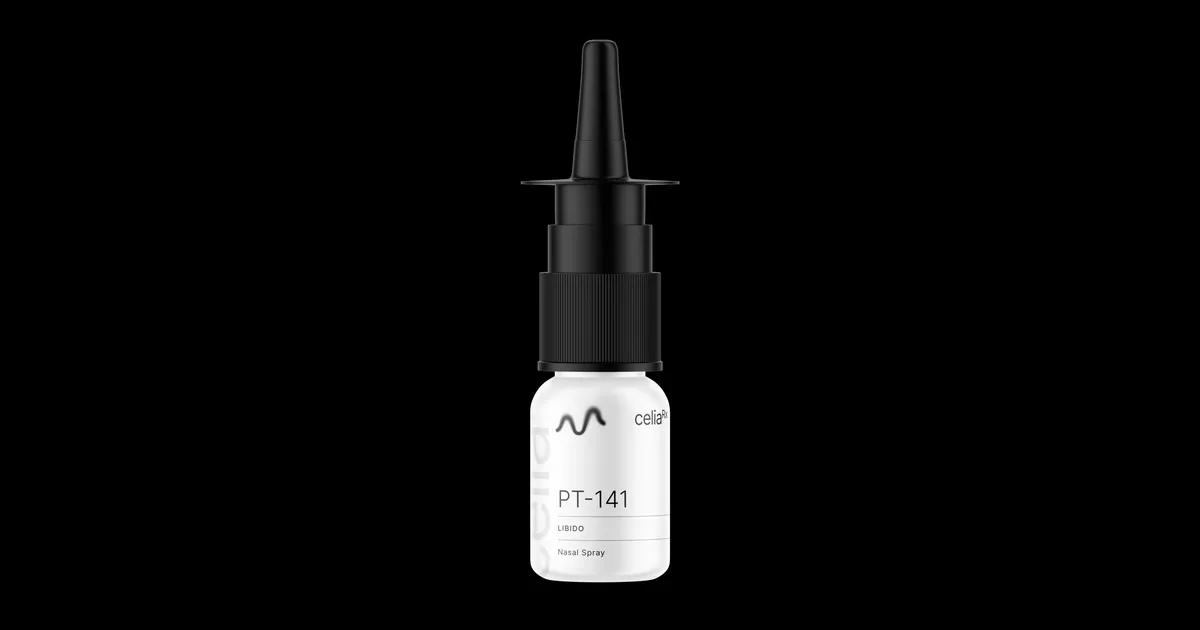
Celia RX ships compounded prescriptions after a $55 consultation, which is credited to your first order. It is the only company here that names its pharmacy on its site, and it carries LegitScript's official seal. The peptide menu is sermorelin (injection, troche or tablet), PT-141 (nasal spray or lozenge) and oxytocin, beside NAD+.
Pros
- Names the pharmacy that fills your prescription
- Buy one product at a time, no membership
What to know
- No blood work, so dosing is not based on your numbers
- No consultations in Mississippi or Alabama; compounded products do not ship to Louisiana, Tennessee, North Carolina or Virginia

Maximus
Maximus is a polished men's health company with a sermorelin program priced at $299.99 for a single month, $274.99 a month on a two-month plan or $199.99 a month on a six-month plan. It carries LegitScript's official seal. Labs are neither included nor required, and sermorelin is its only peptide.
Pros
- Clean app and onboarding
- Lower monthly price on a longer plan
What to know
- No labs required, so monitoring is on you
- FDA warning letter in June 2026 over how it marketed compounded GLP-1s
Strut Health
Strut is the cheapest way into sermorelin on this list, at $99 a month by mouth or $119 a month as an injection, plus NAD+.
Pros
- The lowest sermorelin price here
- LegitScript's official seal
What to know
- FDA warning letter in February 2026
- Most peptides are poorly absorbed by mouth, so ask what evidence backs the oral form
What Is Legal to Buy in November 2026
- Available by prescription today: sermorelin and PT-141 (bremelanotide) are compounded by licensed pharmacies on a prescription and are not on the FDA's list of restricted substances. PT-141 is the active ingredient in Vyleesi, an FDA-approved drug. GHK-Cu for use on the skin returned to the list pharmacies may compound from in May 2026.
- Coming under an HHS draft policy: BPC-157, TB-500, MOTS-c, KPV, epitalon and Semax. Under the draft, a state-licensed pharmacy, a federal facility or a physician could compound one for a named patient: one ingredient per product, from an FDA-registered supplier, by set routes, with adverse events reported. Comments close November 13, 2026, state pharmacy boards are still asking when it takes effect, and none of the six is FDA-approved.
- Still restricted: CJC-1295 and ipamorelin were voted down almost unanimously by the FDA's advisory committee in late 2024. DSIP lost its vote in July 2026.
- September 29, 2023: the FDA moves 19 substances, including BPC-157, TB-500, CJC-1295 and ipamorelin, into Category 2 of its 503A bulk substances list, which blocks compounding.
- April 15, 2026: twelve peptides come off Category 2 after their nominations are withdrawn, opening the way to a new review.
- July 23 to 24, 2026: the advisory committee votes to recommend BPC-157, TB-500, KPV, MOTS-c, Semax and epitalon, against the advice of the FDA's own review staff.
- October 28, 2026: HHS files a draft enforcement policy for those six, published in the Federal Register on October 30 with comments due November 13.
How to Vet a Peptide Company
- Blood work before and during. Ask what they test before prescribing and when they retest. No answer means you are in the medication-only group.
- A named, licensed prescriber. You should see who writes your prescription and which state they are licensed in.
- The pharmacy that fills it. Ask which licensed pharmacy makes your peptide; state pharmacy boards publish disciplinary records.
- Honesty about legal status. A company that says BPC-157 is simply "available now" without mentioning the prescription and the HHS draft is cutting corners.
- A clean FDA record. Search the company's name in the FDA's warning letter database.
No prescription step, "research use only" labels, crypto-only payment, unmarked vials, a pharmacy described as "FDA-approved," pressure to buy bundles before your first clinician call, BPC-157 and TB-500 sold as one blend, or CJC-1295 and ipamorelin on the menu.
Best Peptide Companies: Frequently Asked Questions
What is the best peptide company in 2026?
OneTwenty ranks first because the prescription follows four lab panels a year rather than a questionnaire. Marek Health has the deepest one-time testing, and AgelessRx has the widest menu if you only want the medication.
Are research peptides legal?
Selling them for people to use is not. "Research use only" vials skip the prescription, the licensed pharmacy and FDA oversight, and in August 2026 the FDA sent warning letters to five sellers and rejected that label as a defense. Nobody checks what is in the vial, so purity, dose and sterility are unknown.
What is the difference between medication only and medication plus biomarkers?
Medication only means a prescription after a questionnaire or short visit, with no blood work. Medication plus biomarkers means blood work before you start, a prescription written from your results, and retesting to see whether it is working and whether anything needs to change.
Can I get BPC-157 or TB-500 right now?
Not on settled legal footing. HHS filed a draft policy on October 28, 2026 that would let a state-licensed pharmacy or a physician compound either for a named patient, but comments close November 13 and the policy is not final. Neither peptide is FDA-approved.
How much does a peptide company cost?
Sermorelin runs $99 to $175 a month at the companies here, and other peptides about $99 to $300 a product. Marek Health's intake and labs add $750 or more up front. OneTwenty is $499 a year for the membership, labs included, with peptides from $99 a month.
Medication plus biomarkers, in one membership
OneTwenty runs a 95+ biomarker baseline and three follow-up panels a year, reads your devices beside them, and prescribes through independent licensed providers only when your numbers call for it. $499 a year; peptides from $99 a month.
Get Started with OneTwenty